


Health Service Union members at the Authority are in a stop-work meeting from 9am today to talk about further industrial action in protest against ‘overwork, disorganised planning and broken processes’.
Health Services Union members at the Single Digital Patient Record Implementation Authority have been in a stop-work meeting since 9am today discussing further industrial action in protest against “overwork, non-stop pressure, unrealistic demands” and other issues.
The SDPRIA is due to roll out the Epic single digital patient record at the Hunter New England Local Health District on Wednesday, after a period of delays that saw the original timetable of March abandoned in favour of 20 May and then delayed for a further week.
The stop-work meeting was scheduled from 9am-10am. An HSU representative confirmed to HSD that the meeting was on just prior to 9am.
An insider at the SDPRIA told HSD this morning that staff at the middle management and analyst levels were burning out from “overwork, non-stop pressure from the executive, unrealistic demands and deadlines, constant meetings, the endless barrage of emails requesting more and more output, poor/delayed staff comms, constant issues with pay, sudden changes in direction and urgent requests to complete last-minute activities that require many, many more team members”.
This included manning pre-go live bridge lines from 7am-10pm daily, joining tiger teams at the 11th hour to work on-site before and during go-live, and performing additional readiness activities that required last-minute travel to the customer.
“Everyone is exhausted, many people have burst into tears in the office, and the stern words of the CE [Dr Teresa Anderson] in management meetings to the managers, who work extremely long hours, are wearing them down to the point of hopelessness,” said HSD’s source.
“Nobody can see how this toxic culture, this pressure and the significant disorganisation will end.”
SDPRIA staff were told by the executive that between go-live periods, the statewide service desk would take the load of the calls that came through for assistance, in order to give SDPRIA staff a break from a 24/7 roster.
“But the SWSD staff haven’t been trained appropriately and do not know how to correctly direct an SDPRIA request, so they just call anyone and everyone who could possibly help,” said HSD’s source.
“It’s chaos now and will be worse during the HNE go-live.”
The insider said that when staff raised concerns about staff shortages, broken processes and overwhelmed workers, they were told “this is the nature of a program like this” and “they knew what they signed up for”.
In addition to not having enough staff, “mass resignations” have left gaps in teams which can’t meet deadlines unless they overwork, often doing over time without pay.
“We wanted to say collectively that we cannot keep going like this, it is enough,” said HSD’s source.
“Enough with the never-ending pressure from the executive to produce more with less, enough with the unrealistic expectations, enough of the last-minute changes and requests for staff who are already drowning in tasks, enough with the overwork due to under resourced teams.
“Enough with being treated with disrespect for wanting our employee rights to be upheld and our personal lives to be considered when it comes to rostering and providing support during go-live.”
Related


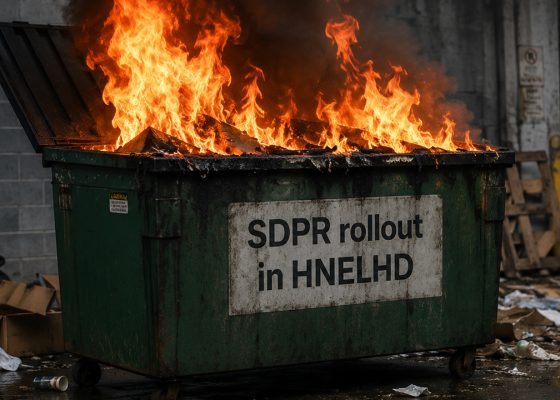
HSD’s source said more resignations “of great talent” and “another delayed go-live” would be the result if conditions did not improve.
Tranche B sites for the rollout – at the moment designated for Northern NSW LHD, Mid North Coast LHD, Northern Sydney LHD, Central Coast LHD, and LIMS North – were “extremely behind” on preparations.
“All we want is a culture that supports and enables staff who are building and implementing this eMR for the state,” said HSD’s source.
SDPRIA employees want the executive of the SDPRIA and NSW Health to “show competent leadership” by:
- improving long-term planning for each tranche, including logical, prospective planning for go-live periods;
- hiring significantly more staff in line with this planning; and
- clear and consistent performance expectations should apply across all levels of staff to ensure workloads and responsibilities are distributed fairly. Where expected outcomes are not being met, this can place additional pressure on other team members and contribute to unsustainable workloads for analysts who are consistently delivering strong results.
“The organisation structure and operational model is antiquated, regressive and broken, failing to support the teams in sustainable ways that allow them to complete a reasonable number of tasks and deliver required, quality outcomes in an eight-hour day,” said HSD’s source.
HSD reached out to the HSU, NSW minister for health Ryan Park, and the SDPRIA for comment on this story but has not yet received a response.