

New research raises concerns that unnecessary knee scans could be sending patients down a path of further investigations and avoidable surgery.
Back in the early 2000s, when I was a young whippersnapper, my GP sent me off for a knee MRI.
I’d been experiencing knee pain when I ran, and as a football-playing twenty-something, I wanted it fixed.
So off I went for a scan, which detected a meniscus tear. Which led me to an orthopaedic surgeon who gave me two options: surgery or physiotherapy.
I chose the physiotherapy route, and I’m here to tell you it was a good news story. My knee recovered, and even as a football-playing forty-something, I haven’t felt the pain in that spot since.
I’ve been told since that this was unusual advice for the time. A friend of mine also saw a surgeon for a similar issue, and she ended up in surgery. Years later, she was still feeling pain in her knee that the invasive procedure hadn’t fixed.
Just because a scan shows something wrong, does that mean it’s the cause of the pain? And even if it is, does it necessarily need fixing?
More than 20 years later, those questions are still relevant, particularly when it comes to knee osteoarthritis.
Of course, neither of our experiences involved osteoarthritis, but they raise an interesting question about how we investigate and treat knee pain.
A new report from the Australian Commission on Safety and Quality in Health Care has found that despite longstanding clinical guidelines advising against routine imaging to diagnose knee osteoarthritis, Australians are getting more knee scans than ever.
Atlas Focus Report: Osteoarthritis of the Knee has revealed that the use of knee CT scans in Australia has surged by 83% in just five years, despite longstanding clinical guidelines advising against routine imaging to diagnose knee osteoarthritis.
Related
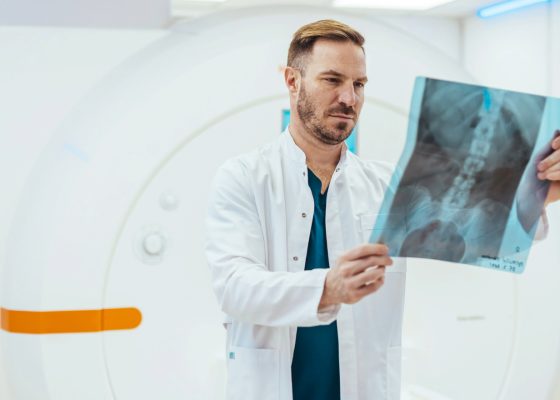


It also revealed a 26% increase in knee ultrasounds among Australians aged 45 years and over in the five years to 2023-24, with GPs responsible for more than 90% of ultrasound requests.
One possible explanation for the rise in CT scans and ultrasounds is a change to Medicare funding arrangements in 2018, which restricted GP-requested knee MRIs for patients aged 50 and over.
Commission medical advisor and practising GP Dr Phoebe Holdenson Kimura acknowledged the possibility.
“In 2018, GPs’ ability to refer for MRI over the age of 50 was restricted,” she said.
“It’s difficult to know but it’s possible that has contributed to the increase in the rates of CT and ultrasound as alternatives to MRI.”
You can’t unsee a scan
Professor David Hunter, a rheumatologist and clinical researcher at the University of Sydney and Royal North Shore Hospital who contributed to the Commission’s latest report’s expert group, said the impact of unnecessary imaging could last beyond the initial investigation.
“The bigger concern I have, is that the application of imaging leads to downstream effects that I don’t think people necessarily think about when they first order a scan,” he said.
“So patients go on and have further investigations – but probably more importantly concerning, are the inappropriate interventions these scans can lead to, like arthroscopy.
“We really need to get the message out about the downstream consequences, that people don’t necessarily think about with regards to the initial investigation.”
He said that structural abnormalities like degenerative meniscal lesions, were very common in older adults, including those who have knee pain and other symptoms. Once a patient or GP has seen the scan, it can often reinforce the belief that a specialist referral is necessary.
“When the patient sees that scan, they see a war zone of a report, and it’s very hard for them to unsee that report,” Professor Hunter said.
Encouragingly, the report found that knee arthroscopy hospitalisations had fallen by 50% over the past decade, suggesting the message about avoiding unnecessary surgery is getting through, even if the message about unnecessary imaging isn’t.
The drivers of unnecessary scanning
The Commission’s clinical commentary listed patient expectations, time pressure, fear of missing pathology and lack of confidence in clinical diagnosis as potential drivers of unnecessary imaging.
Dr Holdenson Kimura said she also believed growing patient expectations were part of the problem, particularly when they’ve arrived at their appointment having researched their symptoms online or with AI.
“I think it’s important for GPs to be on the front foot and actually be asking patients what they’ve already read or what they’re expecting, because that helps to structure or tailor the consultation,” she said.
She said when GPs explained the clinical reasoning behind a diagnosis, including how they excluded red flags such as significant trauma, infection, inflammatory disease, or true mechanical locking, could help reassure patients that a scan was unnecessary.
She said in her experience, most patients were comfortable going without imaging when they understood it wouldn’t change how their treatment was managed.
Professor Hunter said that clinicians should think less about treating imaging abnormalities in isolation, and more about treating the symptoms, function and clinical assessment.
“We need to treat the person, not the scan,” he said.
It’s advice that resonates with me more than 20 years after my own knee problems. I’m still playing football, and I’m very glad I chose the physio.
The Atlas Focus Report: Osteoarthritis of the Knee and the Commission’s updated Osteoarthritis of the Knee Clinical Care Standard are available through the Australian Commission on Safety and Quality in Health Care.