


Nature hates a vacuum, and so do health journalists. Do yourselves a favour.
Somewhere along the way, health and care organisations started believing that transparency was a risk rather than an asset.
It has been quite the week, has it not?
Cohealth, Senate estimates, more on the Epic rollout in NSW, the Department of Health, Disability and Ageing doing the best not-a-backflip ever regarding the integrated assessment tool – there has been no shortage of news.
What feels different this week is that everyone seems to be treating information as something to be managed rather than shared.
All of the instances above have one thing in common – instead of telling the taxpaying public “here’s what we’re doing, here’s why we’re doing it, and here are the risks”, the individuals, organisations and agencies driving the health sector are giving the minimum amount of information they’re prepared to release until circumstances force them to say more.
I’m proud to say that Health Services Daily has been, in at least one case (Cohealth) this week, the circumstance which forced them to say more.
Until we forced the hand of the DoHDA by publishing the leaked draft report (minus an executive summary and recommendations) that fell off the back of a truck into our mailbox, all three parties – DoHDA, the Victorian DoH, and Cohealth – were playing a really sickening game of obfuscation and pass-the-parcel.
The result was none of them got the outcome they wanted.
The Cohealth story became a bigger story precisely because of that organisation’s inability to be honest – with itself, with the review, and with its employees and patients – about just what the problems are with its management.
When an intellectual as erudite as Professor Stephen Duckett is forced to say the words “Come on!” when describing Cohealth’s stated reasons for its many failures, you know that some bullpuckey has been flung.
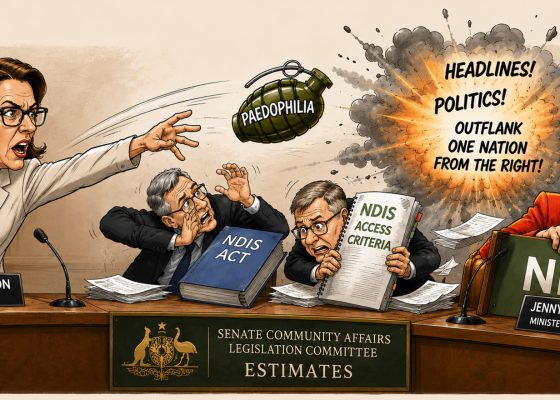
Senate estimates has been its usual hours-long game of hide-and-seek.
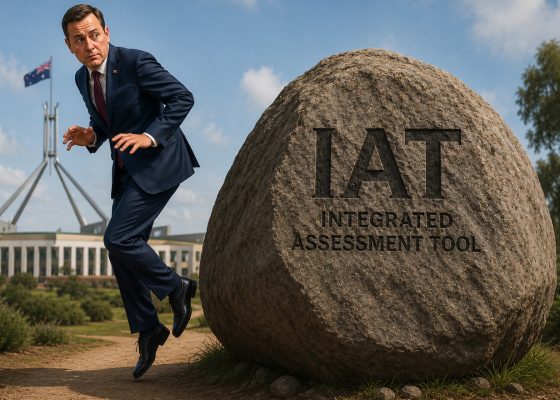
The Department effectively backflipped on the ability of humans to override the integrated assessment tool but has found a way of doing so without (a) saying so, or even (b) telling anyone.
The Single Digital Patient Record Implementation Authority continues to be both a black hole of workplace culture and a volcano of self-congratulation.
Related

None of these are communication failures, by the way. All of them are conscious choices. Deliberate management strategies.
And all of them are governance failures.
Cohealth became a bigger story because information dribbled out. The IAT became more confusing because “refinements” are obfuscated in policy language that defies clarity. The SDPR keeps generating speculation because nobody wants to discuss risks publicly. Senate estimates repeatedly exposed information that could have been volunteered weeks earlier.
The common thread is the assumption that stakeholders can’t cope with uncertainty.
And yet healthcare is a sector where almost everyone – clinicians, patients, providers – deal with uncertainty every day. Every day.
The only people pretending that certainty exists are the people writing the media lines for organisations like Cohealth, the SDPRIA, and the DoHDA.
Every time an organisation declines to explain itself, someone else explains it for them. The vacuum gets filled.
That’s exactly what happened this week:
- journalists filled the vacuum;
- senators filled the vacuum;
- unions filled the vacuum;
- lobby groups filled the vacuum;
- social media filled the vacuum.
Organisations often behave as though transparency creates risk. This week’s events suggest the opposite. The risk comes from leaving everyone else to guess what is going on.
And, frankly, it makes editors like me and my journalists work just that little bit harder to find out what it is you don’t want to talk about.
Part of me is glad you don’t – we enjoy the chase, frankly. Especially when we win.
But, ultimately, the aim, surely, is to make things better for Australian health system users, namely patients — *cough* voters *cough*.