


We already know the return on research is strong. The question now is whether we are prepared to fund the system in a way that allows those returns to be realised.
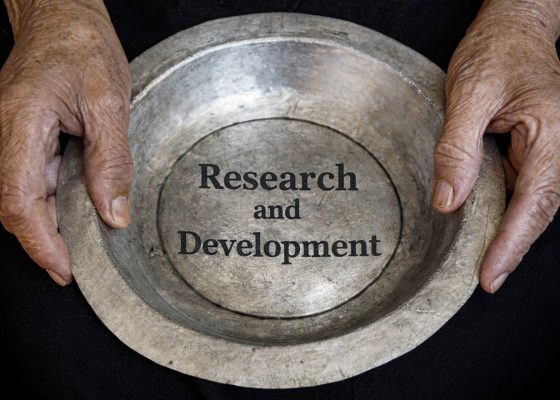
Australia has no shortage of health and medical research talent, but we also have a funding system that too often asks world-class researchers, clinicians, innovators and emerging companies to navigate a fragmented path from discovery to impact.
And that fragmentation is costing us dearly.
Australia needs a new blended capital model that brings together researchers, public, philanthropic, and private funding – each with different risk, return, and impact expectations.
The case for this isn’t ours alone to make.
The National Health and Medical Research Strategy 2026-2036 noted that Australia needs strategically coordinated funding across government, industry, not-for-profit and philanthropy. It suggests this is critical for national prosperity and security, better health outcomes, greater equity, a more resilient health system, plus stronger regional and global partnerships.
Ambitious Australia goes further, describing an RD&I system marked by uncoordinated programs, duplicated effort across jurisdictions, and inefficient competition for limited resources – a problem compounded by the sheer number of overlapping grant schemes within individual programs.
Ambitious Australia points to evidence that this kind of mission-driven investment pays off: a 2021 study of seven EU countries found it lifts both public and private R&D investment and GDP, while a 2023 study found mission-oriented innovation policies deliver stronger long-term growth and resilience for the same public spend, by crowding in private investment.
At Research Australia, we agree that our current priorities are too many and too broad to drive outcomes at scale. Science and research priorities should be linked more clearly to national priorities through specific, outcomes-focused, long-term national goals, backed by public investment across the full research-to-innovation pipeline.
Australia has long excelled at preclinical research, yet too many promising discoveries stall before they become new therapies, diagnostics, devices, care models or companies – this “valley of death” has been discussed for years, but it remains very real.
This is where a co-investment fund can create meaningful change. It would not be another disconnected pool of money. Properly designed, it would create a mechanism to align public priorities with private-sector capability, capital and commercial know-how. It would encourage shared risk, shared focus and shared accountability around outcomes that matter.
This proposal reflects the importance of public investment, but we know it cannot do the job alone.
Related


We too often assume industry only wants to invest once risk is gone. It doesn’t. It’s the system that asks industry to arrive too late to share it. Industry should be a partner from the earliest translational stages, not a funder brought in once certainty has arrived, by which point it’s too late to compete globally, and as one investor said to me recently, it’s when most opportunities are already on life support.
Philanthropy is central too. Its value isn’t just more money; it’s capital government and industry can’t offer. Yet Australian health philanthropy tells us the same thing again and again: no clear entry point, no shared pipeline, no way to co-invest alongside government and industry rather than around them.
There are already signs that co-investment can work.
The Global Health Investment Fund, launched in 2012 by the Gates Foundation, JP Morgan and the German government, mobilised private, public and philanthropic capital to accelerate global health products from development to patient access. It didn’t just blend capital; it built the architecture for it to work: first-loss protection that took genuine risk off private investors, flexible instruments across equity, debt and convertible finance, and governance that protected health impact as rigorously as financial return.
That is the model our sector needs.
Not another grant round with low success rates, not another one-size-fits-all program that treats discovery and translation as competitors for the same scarce pool, but a national co-investment fund, where private capital brings discipline and scale, philanthropy brings patience and risk appetite, and government brings the guarantees that make the whole structure investable.
What we need is for government to lead in helping us co-design it, industry and philanthropy to tell us what will unlock investment, and researchers to ensure it enables them to do what they do best.
Australia needs an investment architecture that matches the scale of research opportunity out there. A co-investment fund with government, industry and philanthropy would be a practical step toward that future.
We already know the return on research is strong. The question now is whether we are prepared to fund the system in a way that allows those returns to be realised.
It’s a simple case of who dares wins! Let’s dare and win!
Nadia Levin is CEO and managing director of Research Australia, the national peak for health and medical research and innovation.