

Sometimes progress does not come from grand gestures. Sometimes it comes from something as simple as noticing who we assume the doctor is in the room.
A boy is in a terrible car accident. His father is killed at the scene. The boy is rushed to hospital and taken to the operating theatre. The surgeon walks in, looks at him, and says:
“I can’t operate on him — he’s my son.”
How is that possible?
I was told this riddle several years ago in a conversation that had nothing to do with medicine.
For many people, the riddle is surprisingly difficult. They search for complicated explanations — adoption, step-parents, a mistake in the story.
The answer, of course, is simple. The surgeon is his mother.
The riddle works because many of us still instinctively imagine a surgeon as male. Even now, decades after women began entering medicine in large numbers, the image of “doctor” still quietly defaults to a man.
As a female doctor, I see that assumption play out almost every shift I work.
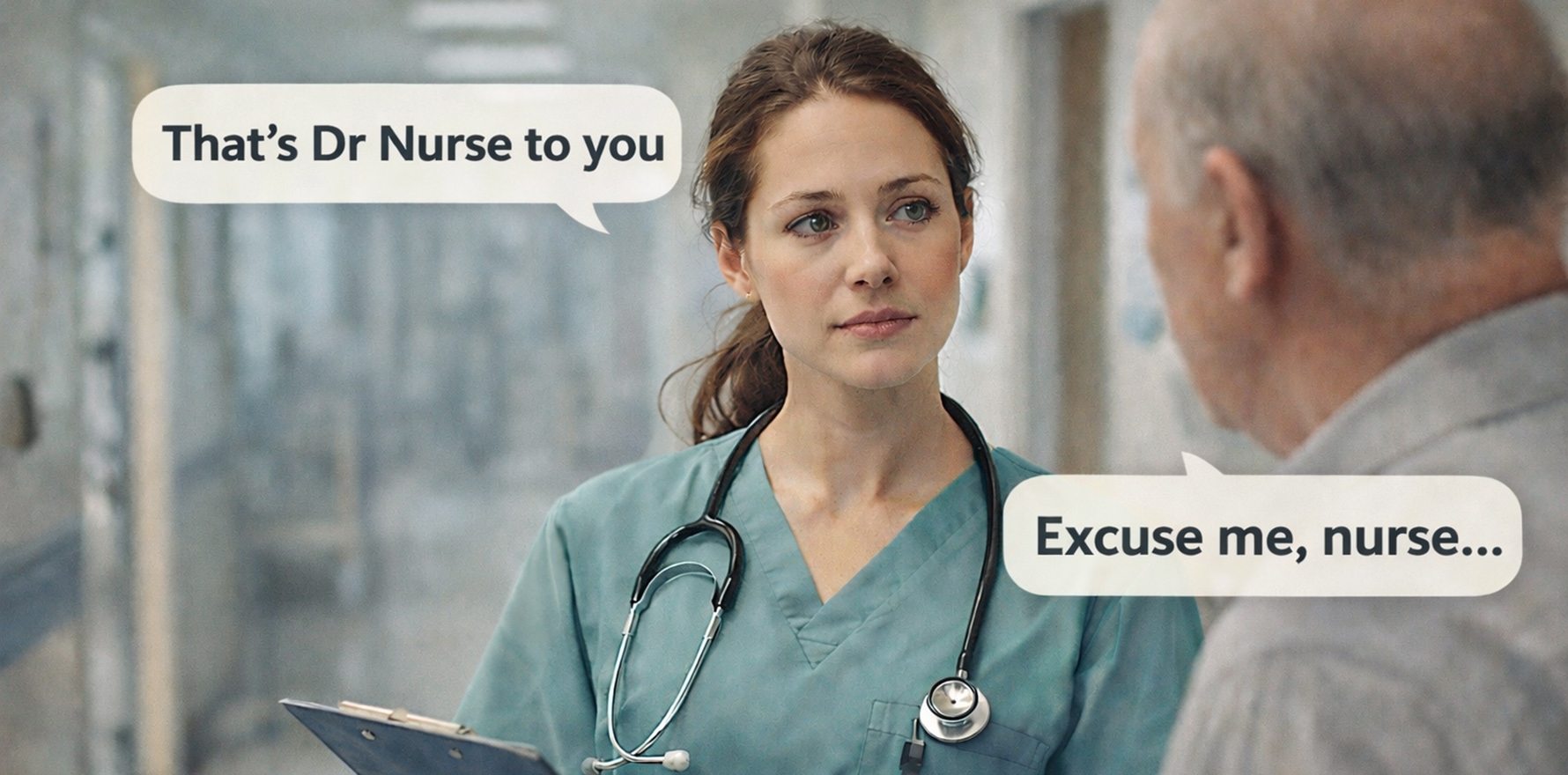
I have worked in medicine for more than 25 years. In that time, it is almost every shift that someone assumes I am a nurse. Yet I cannot recall a single instance where someone has assumed that I am the doctor — let alone the doctor in charge of the emergency department.
Sometimes it is a patient. Sometimes it is a visitor. Sometimes it is another doctor, a paramedic, or a member of the support staff.
Often it happens before I even speak. I walk into a room and someone says, “Nurse, could you help me with this?”
Other times it happens after I have already introduced myself clearly. “Hi, I’m Dr. Kris Gilbert, the doctor looking after you today.” And a few minutes later the patient asks, “When will I see the doctor?”
It happens in more subtle ways too. I might be standing with a junior male doctor or a male nurse, and someone will direct their questions to him — assuming he must be the doctor. People will walk straight past me to speak to him.
Occasionally during handover I will be interrupted to answer a nursing question directed at me, while the male doctors are not addressed.
But they happen again. And again. And again.
When women doctors talk about these experiences, people often try to explain them away.
Maybe it is generational. But it isn’t. I am called “nurse” by people of every age.
Related


Maybe it is because I wear scrubs. Many of my male colleagues wear exactly the same scrubs.
Maybe the word doctor simply isn’t visible enough on my clothes or badge. I have had “DOCTOR” written in large letters on my scrubs, hats and badges. It makes no difference. Many of my male colleagues don’t have any identification on their scrubs.
Maybe it is about appearance. During covid, while wearing full PPE — mask, visor, gown, gloves — I introduced myself to a patient as the doctor looking after them. Moments later I overheard them telling someone on the phone that they needed to hang up because “the nurse was here”.
Maybe it is the way I introduce myself. But I introduce myself clearly as the doctor.
Maybe it is because I am small or physically unassuming. Except I am nearly six feet tall.
None of these explanations quite hold up.
And it is not just patients. Doctors do it. Nurses do it. Paramedics do it. Support staff do it.
This is not about disrespecting nurses. Nurses are essential to healthcare — highly skilled professionals whose work is central to patient care.
But I am not a nurse. And repeatedly being assumed to be one, even after introducing myself as a doctor, tells us something about the expectations we still carry.
If this only happened occasionally, it might be easy to dismiss. But speak to women doctors — particularly those working in specialties traditionally dominated by men — and you will hear the same stories repeated again and again.
The phenomenon is widely recognised, and it has even been examined in the medical literature. A recently published analysis reported in the BMJ looked at surgeons working in private practice in the UK and found that in some specialties there were more surgeons named David than there were women surgeons.
The statistic is striking, but it highlights something important about representation. When roles have historically been dominated by men, assumptions about who belongs in those roles can persist long after the demographics begin to change.
None of these interactions usually come from malice. Most people are simply relying on unconscious assumptions.
But unconscious bias still has consequences.
Each individual moment may seem small. Easy to brush off. Easy to laugh about. Yet when it happens consistently over years of practice, it becomes something else — a quiet, persistent background noise. A reminder that the image many people still hold of a doctor does not include you.
My hope is that the next generation of doctors will find these stories difficult to relate to – that one day the female intern introducing herself on the ward will not feel the need to emphasise the word doctor. That a young registrar will not be routinely mistaken for a nurse, or walked past in favour of a male colleague standing beside her.
Medicine prides itself on evidence, objectivity and fairness. We work hard to eliminate bias in our clinical decision-making because we know how much harm assumptions can cause. Yet the same unconscious assumptions still quietly shape our professional interactions.
One of the reasons these assumptions persist is that many doctors never encounter them personally. If you have never been mistaken for a different role in the hospital, it can be easy to assume the problem no longer exists.
International Women’s Day was not just a moment to celebrate how far women in medicine have come — it was also an opportunity to notice the small patterns we have normalised and to question them.
Sometimes progress does not come from grand gestures. Sometimes it comes from something as simple as noticing who we assume the doctor is in the room.
And perhaps from remembering that the surgeon in that riddle was never a puzzle at all. She was simply doing her job.
Perhaps the real challenge is not solving the riddle, but recognising why it ever seemed like one.
Dr Kristine Gilbert is a practicing doctor with over 25 years of experience in emergency and critical care. I am also the medical educator for Osler CPD Home and previously won the Dean’s Award for Clinical Innovation at Monash University.