


EXCLUSIVE: A review of NSW Health's Single Digital Patient Record Implementation Authority finds widespread burnout, excessive workloads and governance gaps.
An “arm’s length” psychosocial risk assessment into the NSW Single Digital Patient Record Implementation Authority (SDPRIA) has found 84% of participating workers were categorised as “struggling or unwell”, with just 5% classified as “thriving”, as the workforce grapples with sustained workload pressures, fatigue and organisational change.
The review – distributed to SDPRIA staff late yesterday by the Health Services Union (HSU), and obtained by Health Services Daily – followed concerns raised by the HSU on behalf of its members, with the SDPRIA later requesting HealthShare NSW undertake the review.
It also found 73% of respondents reported feeling emotionally exhausted for a large part of the time or all of the time, while 65% reported physical exhaustion. More than 233 workers participated in the assessment process.
The assessment concluded the organisation’s overall current psychosocial risk rating was “High”.
The SDPRIA was established in May 2024 to lead the $2 billion implementation of NSW Health’s Single Digital Patient Record, a statewide electronic medical record – provided by Epic – and designed to give clinicians a single, integrated view of a patient’s care across the public health system.
“The overall psychosocial risk profile indicates a workforce experiencing sustained pressure, with elevated levels of emotional exhaustion, high work demands, organisational change and uncertainty contributing to cumulative psychosocial risk,” the report – commissioned by SDPRIA chief executive Dr Teresa Anderson and conducted by HealthShare NSW, said.
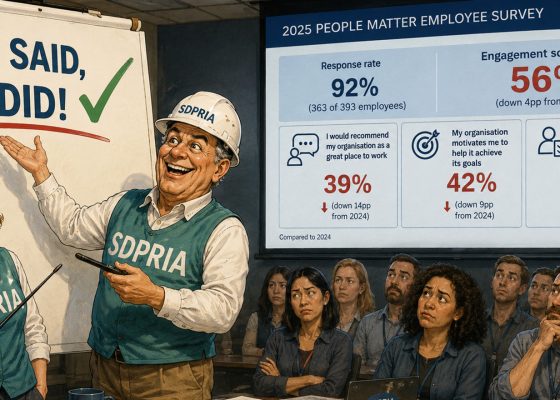
Drawing on the earlier NSW People Matter Employee Survey 2025, the report found 81% of staff believed their workload exceeded their capacity, just 28% thought organisational change was managed well, and only 36% felt able to manage work-related stress.
The psychosocial assessment found 70% of respondents regularly worked beyond their rostered hours, 84% worked at a high or very high pace, 92% frequently multitasked, and only 16% said they often or always had enough time to complete their work.
Just 5% of SDPRIA staff said they often or always had influence over the amount of work assigned to them.
The report identified role overload, organisational change consultation, job control and role clarity as the principal psychosocial hazards, alongside concerns relating to worker support, reward and recognition, and job security.
Staff described work volumes consistently exceeding available hours, high cognitive demands, continual reprioritisation, frequent organisational change, unclear roles and responsibilities, limited consultation, inconsistent communication, low psychological safety and reluctance to raise concerns.
The report said workers also described missing breaks, short-notice roster changes, limited recovery time between shifts, vacancies increasing pressure on remaining staff and uncertainty created by ongoing organisational change.
The review also identified governance shortcomings.
Among them were that a single “Work Health and Safety Business Partner” supports approximately 2450 eHealth NSW and SDPRIA staff, that there is a vacant SDPRIA WHS Officer position, and the absence of a dedicated psychosocial risk register.
The report recommends strengthening governance arrangements, improving workload management, enhancing consultation and communication, clarifying roles and responsibilities, building leadership capability and introducing more structured monitoring of psychosocial risks.
In a letter to Health Services Union division secretary (public health) Gabe Kavanagh, Dr Anderson said the Authority had requested HealthShare NSW undertake the psychosocial risk assessment following concerns raised by the union on behalf of members.
“The report identified a number of psychosocial hazards, including role overload, organisational change and consultation processes, job control, and role clarity,” Dr Anderson wrote.
“We accept the findings of this report and view it as an important first step in understanding the psychosocial impacts of the work.
“The report reflects the genuine concerns that have been raised and the impact of the program’s demands and challenges on staff wellbeing which we take seriously.”
Related


Dr Anderson said the SDPRIA regarded the recommendations as “the beginning of the process rather than the final solution”, with further work required to develop and implement appropriate control measures.
She said the Authority would develop a draft implementation action plan with support from the NSW Ministry of Health, would consult further with staff, explore options including job redesign, workload management, improved role clarity and greater staff involvement in decision-making, and provide regular updates on progress.
“We are committed to working with staff, monitoring progress, and providing regular updates on the actions being taken and the outcomes being achieved,” she wrote.
The HSU has now called a meeting of all SDPRIA members at 4.30pm today to consider the findings and determine the next steps.
In a message to members, the union said the assessment “would not have been possible without HSU member participation” and urged members to review both the report and Dr Anderson’s letter before providing feedback.
“Moving forward, members need to guide the next steps on how they would like to address the outcomes of the report,” the union said.
Members have also been invited to provide confidential written feedback to the union ahead of today’s meeting.
There will be a further update to this story in HSD’s afternoon newsletter today.