


Despite leaving older Australians on 60% interim service packages for up to four months, the DoHDA has hundreds of millions sitting unspent in its coffers, Senate estimates hears.
The Department of Health, Disability and Ageing cannot say how much of a $727 million Support at Home underspend was caused by older Australians receiving only partial funding, as Senate estimates heard some people had waited four months for their full packages.
The department confirmed the $727 million underspend related to the first eight months of Support at Home, from 1 November 2025 to 30 June 2026.
Questioned by opposition health spokeswoman Senator Anne Ruston, officials acknowledged that minimum service offers – under which older people initially receive a proportion of their approved funding — could have contributed to the underspend.
Asked whether the period during which older people received partial funding was reflected in the $727 million figure, a departmental official said:
“I would need to take that specific question on notice, but my working assumption would that it would be a contributing factor.”
Senator Ruston questioned whether the government should reconsider releasing packages at 60% of their approved value when substantial funding remained unspent.
“Given that you’re underspending by 727 million, has it occurred [to you], or has it been considered that maybe you don’t need to be releasing packages at 60%?” she asked.
“Maybe you could be releasing them at 100%.”
Department secretary Blair Comley said the proportion of packages offered at interim rather than full funding levels was ultimately “a matter for government”.
He said the department was examining whether lower-than-expected utilisation was a transitional problem or a longer-term feature of the program.
“We are spending a lot of time trying to understand exactly those factors so that we can work out the balance of minimum service offerings versus full service offering,” Mr Comley said.
Officials identified several possible contributors to the underspend, including workforce availability, service delivery constraints, the release of 83,000 additional places and the time taken for recipients to establish services.
Related


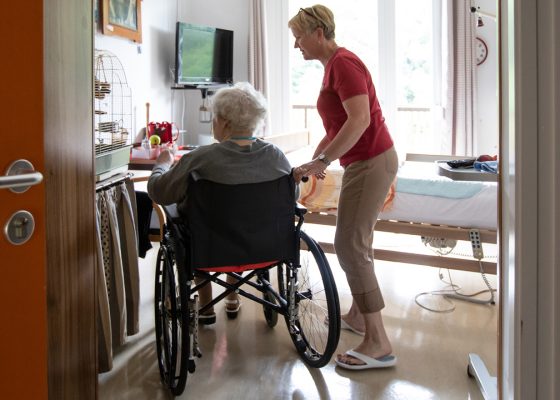
Earlier, Greens Senator Penny Allman-Payne questioned officials about providers reporting waits exceeding 17 weeks for full funding.
The department confirmed some people allocated interim funding on 1 July were still receiving it in late October – approximately four months later.
Officials could not provide an updated average waiting time, saying the most recent available figure was 10 weeks at 30 June.
Acting Inspector-General of Aged Care Kate Pope told the committee that minimum service offers were causing concern among older Australians.
“They feel uncertain about expending money from their package because they’re not sure when they’re going to get the rest of it,” she said.
Ms Pope said recipients were also worried about budgeting and managing their care while waiting for their full allocation.
The department took further questions on notice about the extent to which minimum service offers contributed to the underspend, current utilisation rates and the proportion of packages initially released at partial funding levels.