


It can be worse than the mental health problem, and we have to tackle it, according to the last not-very-glowing review.
The National Mental Health Commission has partnered with SANE Australia to develop the country’s first National Stigma and Discrimination Report Card next month and a second in 2028.
The goal is to provide policy makers with data to improve mental health care and accountability.
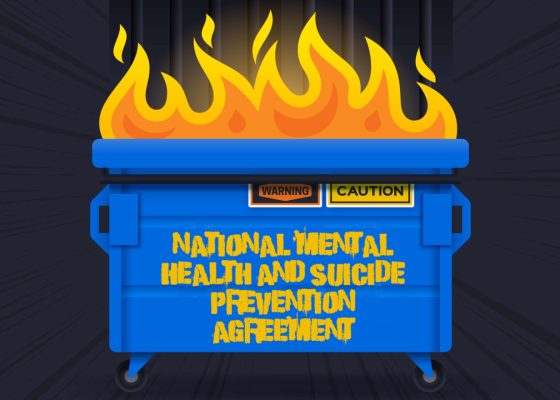
The scathing 2025 Productivity Commission’s Mental Health and Suicide Prevention Agreement review, which found that “the Agreement is not effective and a new policy architecture is needed to articulate the collective actions that will deliver changes to the mental health and suicide prevention system and improve outcomes”, identified stigma as an important issue.
Existing research showed three in four young people in Australia believed mental illness was stigmatised, three in five people with lived experience were treated unfairly or discriminated against in the past year, and three in 10 carers and support people said others avoided or ignored them because of their support role, according to the commission.
“With around four million Australians facing mental health-related stigma and discrimination each year, we urgently need national data to understand this problem,” NHMC CEO David McGrath said.
Also in today’s edition:
- Dementia death gap drives push for ‘Hem’s Law’
- Pfizer, DoHDA talks stall as PBS listing times blow out to almost two years
- No answers on SDPR delay at Hunter New England LHD
- St Vinnie’s group CDO quits for university role
- Psychology workforce shortfall to nearly double by 2038, federal modelling shows
- More than 1900 staff onboarded for NBH transition
- DoHDA’s use of AI to manage provider non-compliance under the microscope
“The Report Card will shine a light on stigma and discrimination, helping to improve outcomes for everyone affected by mental health challenges.”
SANE Australia has long focused on reducing stigma towards people living with complex mental health issues.
“This work builds on SANE’s 40-year legacy of stigma reduction and consumer advocacy,” said CEO Rachel Green.
“Development of the National Stigma and Discrimination Report Card marks a major step toward a fairer, stigma free Australia. By combining world first data with powerful lived experience insights, we can clearly see where stigma is most entrenched and drive the national action needed to ensure people living with mental ill health are fully included and supported.’
The organisation ran the Our Turn to Speak survey in partnership with the Melbourne School of Psychological Sciences and with the support of the Paul Ramsay Foundation, which it used to inform its National Stigma Report, first reported in 2020 and most recently in 2025.
In that survey, 67.7% of the 6032 respondents agreed that the stigma and discrimination they experienced in relation to their mental health problem was worse than the mental health problem itself.
Related


“Reducing the frequency and impact of discrimination in workplaces, welfare benefits and housing should be key targets for policy and practice. Improving the capacity of people in workplaces and intimate partners, families and friendship groups to better understand the impacts of mental health problems on individuals should also be a priority,” the researchers concluded.
A National Survey of Mental Health-Related Stigma and Discrimination, with 7873 respondents, was produced by the Behavioural Economics Team of the Australian Government in November 2022 at the request of the National Mental Health Commission in order to develop and evaluate the National Stigma and Discrimination Reduction Strategy.
The 2025 review found that the strategy was never publicly released and there was no “nationally consistent policy based on common strategy”. They said it was a priority to publish the strategy, and to complete comprehensive guidelines on regional planning and commissioning for primary health networks.