

We need to do more than tone down the worst behaviour. We need to give the best behaviour a stronger voice.
I have never met Helen Haines. I do not know her personally. But I have followed her closely, and much of what I see reflects the qualities I want in a political representative.
She is independent of a party machine. Her public presence does not seem built around entitlement, unquestioning loyalty or the need to defend her side at any cost.
She speaks clearly, explains her positions and argues for what she believes. She appears willing to negotiate, work towards achieving something worthwhile while working with people who disagree with her.
Her parliamentary colleagues echo how she stands out and conducts herself. I see testimony for someone who can be firm without being degrading, disagree without dehumanising, and advocate without treating every opponent as an enemy.
These should be ordinary expectations of anyone in public office. Yet they have become qualities we feel compelled to single out and celebrate.
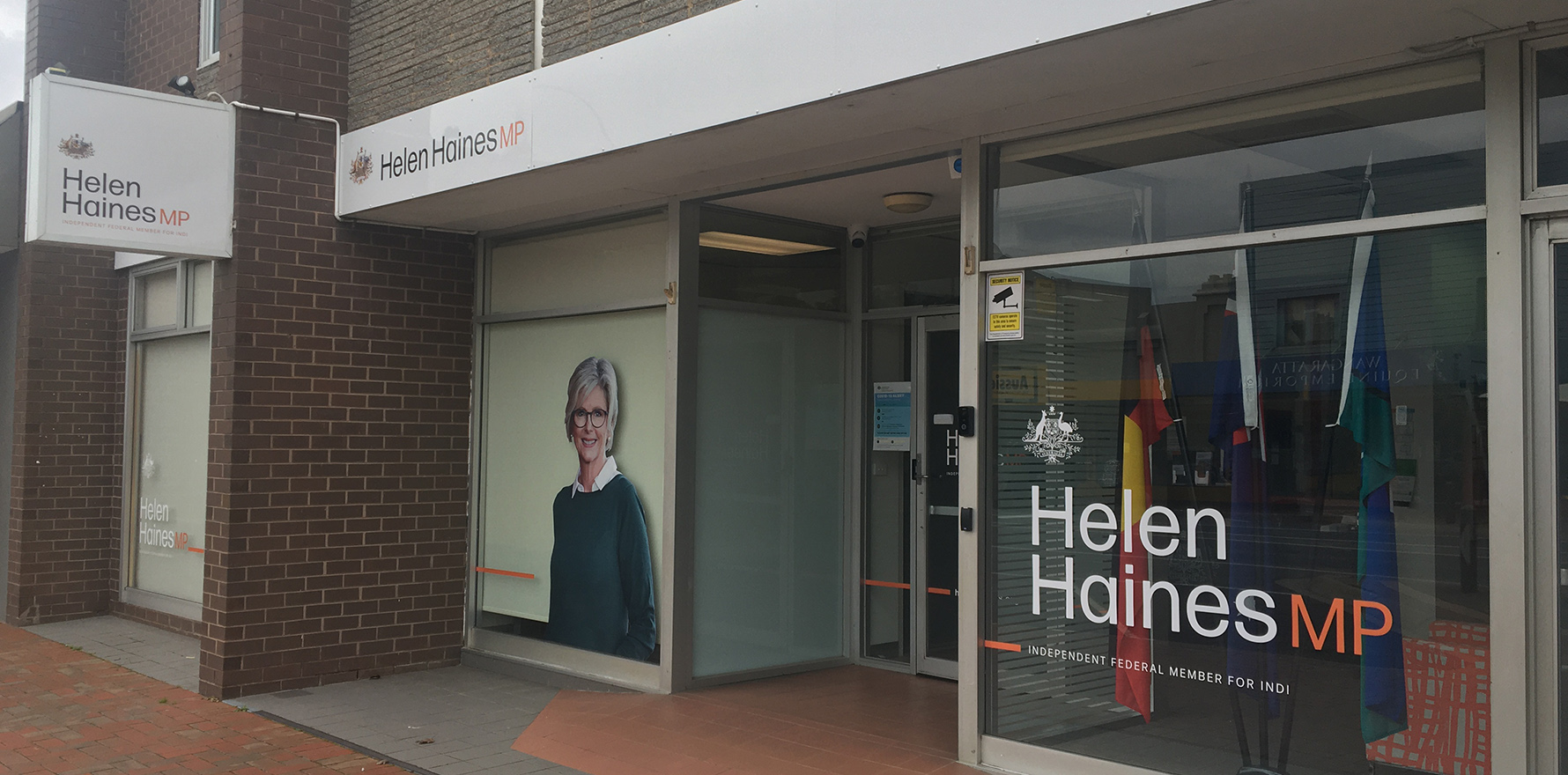
The alleged attack on Dr Haines outside her Wangaratta office is horrifying. My thoughts are with her, her family, her staff and everyone affected.
The circumstances and motives must be established through the investigation and the courts. We should not pretend to know what drove this particular act. But we can examine the political culture around us without claiming that it explains an individual crime.
And that culture demands scrutiny.
Too often, the behaviour that attracts attention, money and loyalty is the opposite of what we admire in Dr Haines.
Humiliation becomes entertainment. Contempt passes for conviction. A willingness to listen is portrayed as weakness, while an unwillingness to reconsider becomes proof of strength. Media organisations amplify them. Social platforms circulate their most inflammatory moments. Supporters reward them.
Then, when something terrible happens, we collectively ask how public life became so hostile. There is a deep contradiction here.
We cannot keep rewarding contempt and expect decency to remain the norm. Responsibility for violence belongs to those who commit it. That must remain clear. Alongside that individual responsibility sits a broader responsibility for the standards we tolerate, promote and defend.
Politicians carry particular weight. Their words reach widely. Their behaviour gives others permission to behave similarly. When leaders repeatedly portray opponents as corrupt, illegitimate or less worthy of respect, they weaken the boundaries that make democratic disagreement possible.
The same applies to the rest of us. What do we share? What do we applaud? What do we excuse because it comes from someone on our side?
Condemning violence matters. Protecting public officials matters. Police investigations, appropriate security and calls for restraint are necessary. But they cannot, by themselves, repair the culture in which public life takes place.
A call to “tone it down” means little if the same people return tomorrow to the same personal attacks, degrading images and deliberate distortions. Condemnation has to be followed by a change in conduct.
Related



We also need a more serious conversation about disagreement.
Vigorous debate is essential to democracy. We should be able to challenge policies, scrutinise decisions and hold powerful people accountable. Respect does not require agreement, and civility should never become an excuse to avoid difficult questions.
But there is a difference between challenging an argument and assaulting someone’s character. Between questioning a decision and encouraging harassment. Between exercising our own rights and denying the rights of others. Learning to recognise those boundaries is part of learning to live together.
Our information environment makes that harder.
People can find a sense of identity and belonging through shared grievance, sometimes with people they have never met. Much of this happens beyond the view of families, neighbours and communities.
Meanwhile, provocative behaviour attracts attention, and attention encourages more of it.
We need to change what we reward. That starts with giving good political behaviour greater visibility. We should notice and support people who explain, listen, negotiate and accept scrutiny. Decency needs an audience.
Media coverage matters too. The public needs accurate reporting on violence, with scrutiny of the circumstances and the institutional response.
That can be done without turning the alleged offender into a spectacle or endlessly circulating inflammatory material. Responsible reporting should inform the public while considering the consequences of the attention it creates. Social platforms also need meaningful guardrails, clear reporting systems and effective responses to threats and harassment.
Online public spaces require accountability, just as physical public spaces do.
Schools have a role in preparing young people for this environment. Civics, media literacy, emotional regulation and the ability to disagree constructively are practical life skills.
Young people need opportunities to question information, recognise manipulation and discuss difficult issues without reducing one another to labels.
Accessible community mental health services are another part of a healthier society. People experiencing distress need timely care and support. That is a responsibility in its own right; mental illness should never become a catch-all explanation for violence.
We cannot eliminate every threat or prevent every act of violence. We can help build a public culture with stronger expectations and firmer boundaries. I admire Helen Haines because she appears to demonstrate that conviction and decency can coexist.
You can have priorities, argue strongly and pursue change while treating other people with dignity. That should be the standard we expect.
If we want more people like Helen in public life, we have to make that kind of politics worth practising through our votes, our attention, our support and our own behaviour.
We need to do more than ask the worst voices to quieten down. We need to give the best ones a stronger voice.
A/Prof Alam Yoosuff is a specialist rural generalist in Finley, NSW.
This article was first published on Prof Yoosuff’s substack. Read the original here.