


With parliamentary debate on the legislation due to kick off next week, the independent Member for Kooyong wants some 'fundamental flaws' addressed.
Independent Member for Kooyong Dr Monique Ryan today called on the federal government to address fundamental flaws in its legislation before the debate begins next week, after community consultation revealed widespread anxiety about its potential impact.
This week, Dr Ryan conducted two community consultation sessions, involving more than 70 local NDIS participants, carers, families, and disability service providers based in the Kooyong electorate. More have provided feedback by phone or email, she said in a statement.
She said participants had identified a fundamental shift in the character of the scheme, away from a rights-based model grounded in inclusion and dignity, toward a systemic focus on cost-containment.
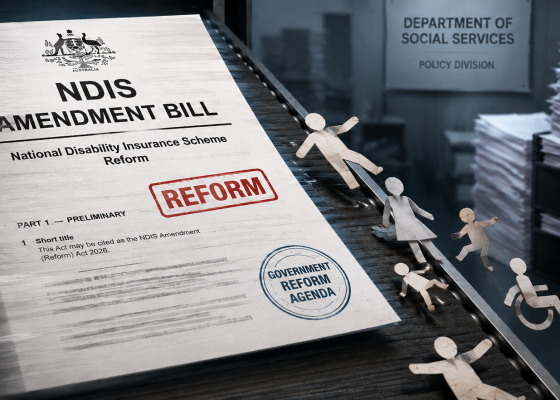
Dr Ryan will move several amendments to the Bill in Parliament next week, targeting the need to have alternative supports in place before key eligibility and funding changes commence, and stronger safeguards for ministerial power to change participant eligibility.
She will also challenge restrictions to the right for review of NDIS decisions and the new, broad-ranging ministerial powers to restrict access to specific services, cut individual packages, and to set arbitrary prices for supports.
“There is universal agreement that the NDIS needs to be sustainable and that fraud must be addressed. But there is also increasing concern that the government is citing fraud, rorting and waste, for which it should be taking responsibility, as an excuse for far-reaching cuts enacted without adequate consultation or engagement with the disability community,” Dr Ryan said.
“People are already experiencing funding reductions. They believe this legislation is about cost-cutting, not care.
“Australians with a disability are not asking for special treatment. They are asking for the principle the NDIS was built on, ‘nothing about us without us’, to be honoured. That principle has been disregarded in the drafting and rushed presentation of this legislation.”
Dr Ryan said the NDIS had “real problems with fraud, with waste, with regulatory failure”, and these had been building for 13 years.
“But this Bill asks people living with disability to pay the price of failures that were never theirs to own,” she said.
“My amendments are about restoring the transparency, accountability and rights protections that the disability community deserves, and that the Bill currently strips away.”
Meanwhile, a new government report warned that the NDIS is at risk of losing public trust unless escalating costs, inconsistent access decisions, and mounting fraud concerns are brought under control.
The new Office of Impact Analysis report has laid bare the scale of the scheme’s growth and foreshadowing tighter eligibility rules and funding restrictions.
Also in today’s edition:
- SDPR rollout: volunteers allegedly brought in as go-live looms large
- NSW Health sorry after latest ‘clinical marshmallow’ gaffe
- Feds unveil 10-year research strategy and $508m MRFF boost
- Third Degree: Why homelessness is a health issue
- ADHA clinical chief says healthcare moving from ‘snapshots to streams’
- St Vincent’s out to reimagine care beyond walls
The 106-page analysis, prepared by the Department of Health, Disability and Ageing, revealed the NDIS has moved well beyond the vision set out by the Productivity Commission more than a decade ago, with participant numbers and spending now far exceeding original forecasts.
“The current legislative settings and implementation of the Scheme has not been consistent with its original design as envisaged in the 2011 Productivity Commission inquiry into ‘Disability Care and Support’,” the report said.
“This has seen the cost of the Scheme continue to grow beyond sustainable levels, driven by both the higher than anticipated number of participants, and higher average costs per participant than the 2011 Productivity Commission and governments anticipated.”
At the end of March 2026, the scheme supported 774,456 participants at a cost of $50.2 billion over 12 months, compared with the Productivity Commission’s 2011 estimate of around 411,000 participants and annual costs of $13.6 billion by full rollout.
Without further reform, the Parliamentary Budget Office has forecast the NDIS would cost $106.7 billion by 2035-36.
The analysis said the government was now targeting annual cost growth of 5-6%, down from the current 10.5%, after National Cabinet concluded the existing trajectory was unsustainable.
“The Scheme operates within a public value framework underpinned by Australians’ strong expectations that government will maintain institutions providing social protection to support people with disability,” the report said.
“Public value is created when public institutions produce outcomes that are authorised by the community, operationally feasible, and substantively valued beyond what markets can deliver. The NDIS was designed to meet this threshold, grounded in a commitment that disability support should be needs-based, portable, and equitable.
“There have been unintended consequences in the implementation of these design parameters. These have included an over-reliance on access lists which are based on diagnosis rather than impairment, inequitable, and inconsistent planning outcomes for participants, and market related shortcomings, non‑compliance, and fraudulent activities.
“This has contributed to significant growth in overall expenditure, well beyond a sustainable level for demand-driven social services.”
The analysis was critical of the current system for relying too heavily on external reports from treating clinicians, saying this creates inequity between participants who can afford assessments and those who cannot.
“Participants reported being required to present themselves in the worst possible light to justify supports and relying on costly reports from health professionals which are not always used,” the report said.
“This deficit-based approach is disempowering and stressful for individuals and families. It also undermines the NDIS principle of promoting independence and social and economic participation.”
Related


The analysis also raised concerns about workforce distortion, provider instability and fraud, noting the NDIA estimates around 90% of plan management providers show “significant indicators of fraud”.
The report warned that rising costs were creating broader tensions across the health and social care system, including comparisons with aged care funding and pressure on governments to balance disability spending against other priorities such as health and education.
Despite the sweeping tone of the reforms, the paper acknowledged the NDIS remains “life changing” for many participants and says the aim is to restore the scheme to its “original intent” rather than dismantle it.
The report’s release comes on the eve of debate in federal parliament next week about NDIS reform legislation.
Read the full report here.