

NSW public hospitals are facing a snap review following a host of health problems including mould that triggered invasive fungal infections in transplant patients.
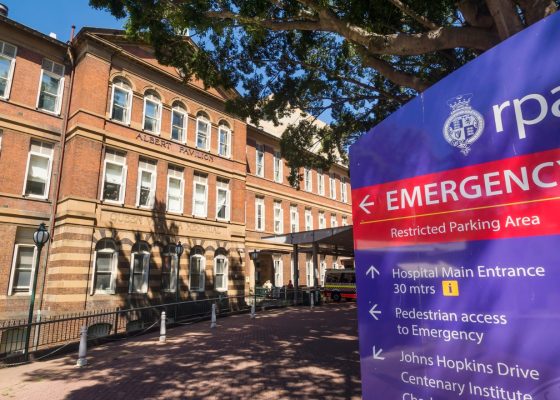
NSW Health secretary Susan Pearce has apologised to the families of transplant patients at Sydney’s Royal Prince Alfred Hospital who developed invasive fungal infections from mould during construction work at the hospital.
Sydney Local Health District is investigating a fungal infection cluster at RPA’s transplant unit in which six patients developed infections between October and December last year, and two have since died.
Ms Pearce told the NSW Legislative Council’s Budget Estimates hearing today that she was “deeply sorry” to the families of the patients.
“We are required to provide safe care to our patients, and we do, and when these issues are identified, they are addressed as quickly as possible,” Ms Pearce said.
“That is something … we take very seriously.
“I should also add that, given I have not had the chance, that we are deeply sorry to families of the patients at Royal Prince Alfred Hospital, or anyone, in fact, impacted by these things.
“That is the last thing any of us would want.”
Earlier today, NSW health minister Ryan Park ordered a snap review of public hospitals following reports of a host of problems including mould, cockroaches, pigeons, bird lice and possums detected at NSW public hospitals in the last 14 years.
Mr Park also faced the estimates hearing where he was questioned about when he knew the Aspergillus fungus had been detected at RPA.
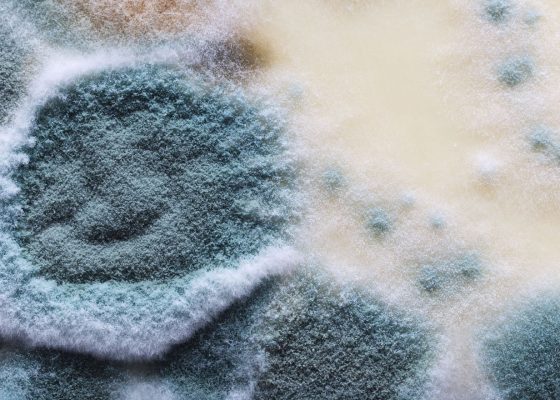
He told the committee that clinicians identified that there was a larger number of fungal infections at RPA than normal, and “a view has been formed by experts that it’s likely because of the major redevelopment of the hospital”.
Mr Park said his office was first informed about the fungal infections on Christmas Eve last year, but as he was on leave at the time he only became aware of the issue “in the first part of February”.
Mr Park said the issue was being managed by NSW Health through Sydney LHD CEO Deb Willcox and NSW Health CHO and deputy secretary of population and public health, Dr Kerry Chant.
“They had already set up what are called a clinical group around this,” Mr Park told the hearing.
“They had made sure that first and foremost … hundreds of people, patients, outpatient staff were informed of the issue, about the issue, what action was being taken.
“As soon as I became aware of it, I asked what processes have been put in around the time.
“I got some assurances that what had occurred at the time was around making sure that patients … were informed, outpatients were informed, staff were informed.
“I don’t know what we would do any differently, because I’ve got to assure you that this is not something that … we were trying to hide anyway.”
Mr Park said clinicians identified the infection in October.
“The priority was informing patients, our patients and staff,” Mr Park said.
“We had to balance the fact that we wanted to make sure staff were informed, patients were informed.
“That’s a large number of people, but we didn’t want to unnecessarily concern the community about a mould that exists in the environment, and I did not want, Health did not want that to be a concern for them going into one of the state’s largest hospitals.”
When asked if the deaths were “avoidable”, Mr Park said that would form part of the investigation.
“I’ll make sure that that investigation is clear, public and transparent. That will be done by experts in the field, and they will make a determination around that.
“I want to be clear about this. These are very, very unwell patients. They’re transplant patients. They are arguably some of the sickest patients we have in our hospitals.
“But our view at the moment or hypothesis at the moment is from clinicians, before we do the investigations that are currently on, is that Aspergillus likely contributed to their passing.”
Ms Willcox said the decision not to release a statement to the public was made on 24 December by an expert advisory panel chaired by Dr Chant, with senior mycologists from Westmead Hospital, RPA transplant clinicians and infectious disease clinicians.
“These things are always a balance. We had a situation that was completely under control,” Ms Willcox told the hearing.
Related
“We took the question of, should we release a public statement to the panel, the recommendation was, on this occasion, it was not necessary. The situation was under control.
“The air sampling had indicated the air was clear, and the patients and the outpatients and clinical staff who were directly affected were absolutely aware of the situation.
“We didn’t need to contact visitors, because the air sampling had shown the hospital was clean.”
Ms Willcox said remediation work was undertaken in the ward once clinicians raised the suspicion of the Aspergillus cluster.
“In addition, the works had ceased for Christmas and did not recommence until the fifth of January, so there was no risk to patients.
“At that time, we had done a deep, clean inspection of the ward, including up in the ceiling. We’ve done air sampling. There was no evidence of Aspergillus or any other pathogens in the air, and those patients were not being readmitted to the ward until all those works have been completed.”
Ms Willcox said that between September and December 2025, dust monitoring results indicated that there were low levels of dust and no issues of concern.
Emma Skulander, deputy secretary for NSW Health’s infrastructure and asset management division and acting CEO for health infrastructure, told the hearing that there was regular dust monitoring during construction at RPA, but said monitoring did not occur inside the wards.
Ms Skulander said as construction works moved closer to the ward, further protection was put into place included establishing hoarding in November.
“As the works were getting closer to the ward, that hoarding was put up and there are also other controls in place, such as HEPA filters,” Ms Skulander said.
Mr Park said in a statement today that the snap review had so far identified 112 non-routine issues over the past year. Of those, 74 have been resolved, 32 are being rectified and six are being investigated.
“With over 4000 buildings under NSW Health, including 220 hospitals, of varying ages, in a state that has endured a spate of severe weather events, it is unrealistic to pledge that there will never be maintenance issues,” Mr Park said.
“We know that governments of all persuasions have experienced these challenges that have been reported publicly including mosquitos at Liverpool Hospital in 2019; crickets at Goulburn Hospital in 2021; beetles at Coffs Harbour Hospital in 2020; mould at Wyong in 2013; and asbestos, leaking roof, and a possum at Concord Hospital in 2016.
“I now know of maintenance issues not known to have been reported in the media including flies at Royal North Shore in 2019; birds at Westmead in 2017; cockroaches at Wyong in 2017; possums at Balmain in 2012; pigeons at Gladesville in 2017 and bird lice at Tamworth in 2022.
“I’ve got to be upfront, I can never pledge that there will never be maintenance issues. Any government that does is not being realistic or truthful. But I can pledge that the health system will work as quickly as possible to rectify them.”
Mr Park said processes were in place in local health districts for staff to report cleaning or maintenance issues.
Those issues include:
- nine in Hunter New England, five resolved and four being rectified;
- five in Western NSW, two resolved and three being rectified;
- one in Murrumbidgee – being rectified;
- one in Southern NSW – resolved;
- eight on the Mid North Coast – largely the result of severe weather events – of which seven are being rectified, one is being looked more closely at;
- 10 in the Illawarra Shoalhaven, eight resolved and two being rectified;
- three on the Central Coast – two resolved and one being rectified;
- one in Nepean Blue Mountains – being rectified;
- five in Northern NSW with mitigations in place but planning for upgrades in progress;
- 12 in South East Sydney – 10 resolved and two being rectified;
- 27 in Northern Sydney– 26 resolved and one being rectified;
- 17 in Sydney – 10 resolved, seven being rectified;
- one at South West Sydney – being rectified;
- 12 in Western Sydney – 10 resolved and two being rectified.
Some items requiring further work to fully rectify include:
- Ongoing challenges with pigeons at RPA and Tamworth;
- Roof rectification works at Muswellbrook;
- Roof rectification works at four facilities in Northern NSW;
- Mould and maintenance issues with hydrotherapy services in the Mid North Coast;
- Water ingress from storm damage and plumbing issues at Coonabarabran.