

Remote exam tech delivers ‘better care at a fraction of the cost’: Australia must catch up.
At a remote nursing station in Canada’s Saskatchewan province, a nursing assistant positions a robotic arm above a patient’s abdomen.
Hundreds of kilometres away in Saskatoon, a technologist grips a simulated probe, ready to guide the robot in real time to perform a prenatal ultrasound.
The robotic technology was initially developed to enable remote ultrasounds on astronauts aboard the International Space Station. Now, paired with Teladoc Health’s virtual care platform, it’s transforming acute virtual care back on Earth.
For the patient, a First Nations woman living in a remote area, the scan marks a milestone: Receiving high-quality prenatal care without having to leave her community.
While it sounds like science fiction, the future of high-quality, acute virtual care is already here, and it has the potential to transform healthcare delivery in Australia.
Yet many Australian health services rely on basic video conferencing and legacy systems to deliver acute care remotely. Significant investment in electronic medical records hasn’t extended to the tools clinicians need for high-acuity, time-sensitive situations. This isn’t just a technical oversight. It’s a clinical risk.
The human cost of the current approach
In Australia, acute virtual care today is often delivered using suboptimal technology such as consumer-grade apps like WhatsApp or FaceTime, or a patchwork of platforms across fragmented systems.
Without the right virtual care tools to perform a thorough remote assessment, clinicians may find themselves having to make critical decisions with incomplete information. The result? Unnecessary hospital transfers, delayed interventions, and in some cases, preventable harm.
Maternal and infant health provides a clear example. University of South Australia research shows that maternal and infant mortality rates, as well as preterm and low-birthweight births, “are substantially higher” in rural Australia than metropolitan areas[1], with inequitable ultrasound access in rural areas suggested as a key factor[2].
The Solution: Virtual care technology that works for clinicians and patients
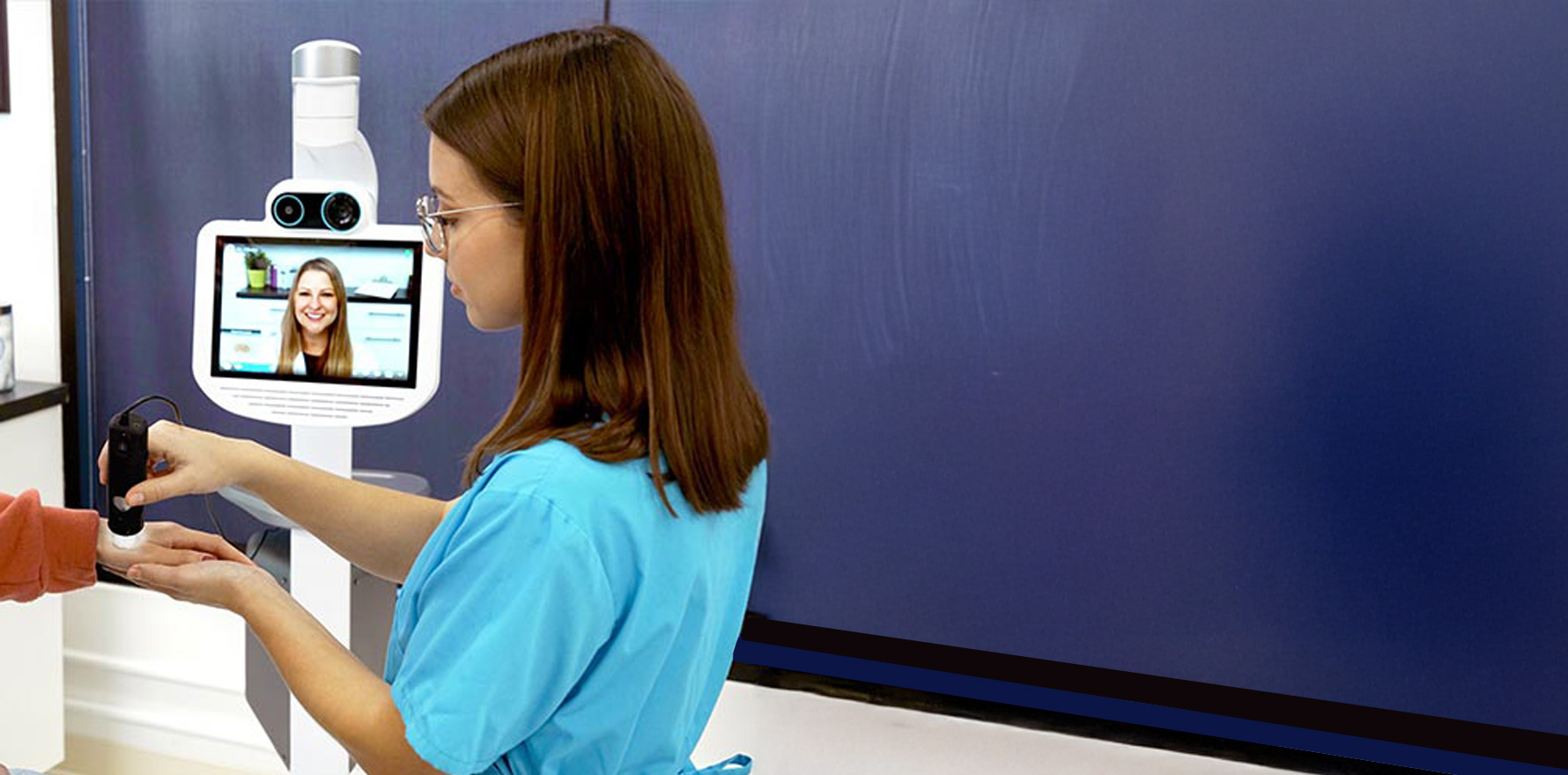
We have the technology. It’s here. And it’s intuitive, powerful, and designed to improve access to care for patients while reducing the burden on already stretched bedside staff. Unlike consumer-grade apps, clinical-grade acute virtual care solutions deliver:
- Remotely controlled, high-definition cameras with advanced controls enabling detailed clinical examinations
- Dual-camera setups: one showing clinician hand placement (e.g., ultrasound probe), the other streaming diagnostic feeds like ultrasound or CT scans.
- Live streaming capabilities with native imaging system integrations, allowing real-time remote viewing of CTs, ultrasounds, and other diagnostics.
- Connected tools such as digital stethoscopes, otoscopes, and dermatoscopes for live auscultation and visual assessments.
- Web-based platforms requiring no downloads or complex setup for clinical staff.
Supercharging acute virtual care with sustainable care models
Clinical-grade virtual care technology becomes even more powerful when paired with innovative care models, enabling sustainable, high-quality care that improves patient access while reducing clinician burden.
And that’s exactly what was achieved in Saskatchewan thanks to the work of Dr Ivar Mendez and his team. He’s a Professor of Surgery at the University of Saskatchewan and Director of the Virtual Health Hub, who graciously took time out of his busy schedule while on a World Health Organisation humanitarian mission in Peru to talk to us about how it all come together.
Maternal and newborn mortality rates are higher in Saskatchewan’s remote areas than in urban centres, a disparity Dr Mendez attributes to limited access to prenatal ultrasounds.
“In these remote communities, pregnant women are often flown to the city for ultrasounds and stay in hotels, usually alone for their first scan. Sometimes, the logistics are so challenging that they can’t go at all.”
Enter telerobotic ultrasonography. Dr Mendez and his team pioneered the use of the tech leading to the deployment of seven robotic ultrasound devices across remote communities in northern Canada.
While the tech was an important component of the project success, there was another critical aspect to consider.
“What we realised after a decade of working in this space is that true change comes from within,” said Dr. Mendez. “Like in Australia, it’s very hard to recruit and retain healthcare workers in remote locations.
“By building capacity within the local community and training individuals who can return to provide care where they’re needed most, we create a sustainable pathway for the future.”
The solution lay in creating a Virtual Healthcare Assistant Training Program. Over the course of 19 weeks, nurse aides from the local community were trained to use the robotic sonography equipment, with an emphasis on effective teamwork.
“Training individuals to work as a team, use appropriate technology, and be employed to serve their own communities has proven highly effective, achieving results at a fraction of the cost and time to train a registered nurse.”
To secure government support for his groundbreaking project, Dr Mendez said that it was important to clearly delineate why the status quo was not working, while also using evidence to show that they could “provide better care at a fraction of the cost.”
Let’s not wait to improve health equity
Like Saskatchewan, Australia faces significant challenges in delivering healthcare across vast, sparsely populated regions, where rural and remote communities often have poorer access to care and clinician shortages.
But these challenges also present an opportunity for Australia to bridge these gaps and advance health equity by investing in acute virtual care technologies and co-designed sustainable models of care built with communities.
The current system is falling short. If astronauts on the International Space Station can access high-quality ultrasounds, surely a pregnant First Nations woman in a remote part of Australia can too. It’s time to invest in a future where virtual care is not a compromise but a clinical asset.
Teladoc Health Australia & New Zealand empowers people to achieve new levels of healthy, wherever they are, through high-quality, personalised virtual care services and intelligent technology. Learn more: teladochealth.com.au
References
[1] Bidner, Amber & Bezak, Eva & Parange, Nayana. (2023). Antenatal ultrasound needs-analysis survey of Australian rural/remote healthcare clinicians: recommendations for improved service quality and access. BMC Public Health.
[2] University of South Australia. (2022). Rural pregnant women in dire need of better ultrasound services.