


Both changes should be abandoned for the sake of the older people currently being disadvantaged and the overburdened hospitals where they will find themselves when inadequate arrangements collapse.
Two unexpected developments since the introduction of Support at Home have significantly disrupted people’s entry to and successful participation in aged care at home.
The first of these unheralded changes has been the undermining of the independent assessment process.
Before November last year, if a person’s support was inadequate because their needs had increased, we could be reasonably confident an upgrade application would be approved. Even in the minority of circumstances when an approval was not given, we would understand the rationale for the rejection.
This is no longer true.
Since then, assessments routinely reject justifiable requests for funding extensions. Based on our experience, people who clearly need higher levels of support are frequently being advised their newly assessed level is lower than they are already receiving.
At the heart of the problem is the recently launched assessment algorithm which determines support people are now entitled to receive.
I am unaware of any independent scrutiny of the validity or reliability of the results the algorithm produces, and there is no transparency about its calculation methodology.
Notably, the results of the algorithm are not permitted to be overridden by an assessor’s professional judgement, irrespective of how clearly inappropriate or unjust the outcomes are.
I and others have drawn a parallel between this new assessment process and the discredited Robodebt algorithm, which also provided no opportunity for human oversight to correct errors.
Related


Second, the Department of Health, Disability and Ageing appears to be making extensive use of the provision in the new Aged Care Act that enables the granting of interim funding at only 60% of the level a person has been assessed as needing.
This had been presented as a safety net for people who were waiting too long to be allocated funding, but in practice it appears to have become the default option for all new funding.
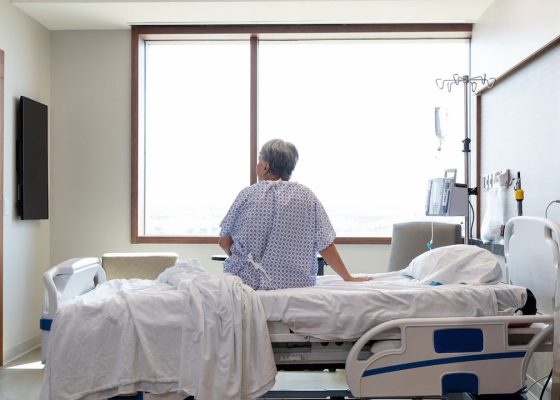
By definition, 60% funding is insufficient to meet a person’s care needs. It is time consuming and stressful for an older person, their family and their provider to try to stitch together a mix of clearly inadequate services to enable the person to remain at home while waiting for full funding to be allocated.
A further issue is that this systematic underfunding makes a transition between the entry-level Commonwealth Home Support Program (CHSP) and Support at Home more problematic.
This is because many people are already receiving more services through CHSP than they would be able to obtain under 60% Support at Home funding.
Taken together, these two unanticipated developments have fundamentally and negatively changed the environment for aged care at home.
Both changes should be abandoned for the sake of the older people currently being disadvantaged and the overburdened hospitals where they will find themselves when inadequate arrangements collapse.
Adrian Morgan is the general manager at Flexi Care, an independent, community-owned, not-for-profit provider of aged services based in Brisbane.
This article was first published on Mr Morgan’s LinkedIn feed. Read the original article here.