


Senator Anne Ruston is perpetually ‘keen to understand’ and it’s that work ethic that might just see her beat factional politics to the health portfolio if the Libs ever make it to government.
On 17 April 2022, then Prime Minister Scott Morrison announced that Senator Anne Ruston would become minister for health and aged care should his government be re-elected, replacing the retiring incumbent, Greg Hunt.
History shows that 34 days later Anthony Albanese’s Labor Party won 19 seats more than the Coalition, securing a three-seat majority in the House of Representatives, and government after nine years in opposition.
This week I had the pleasure of having a one-on-one chat with Senator Ruston, and it’s clear the dogged opposition health and aged care spokesperson is not fazed by the prospect of uncertainty when it comes to being health minister one day.
“It would be an incredible honour,” she told me.
“It’s an incredible honour to be a minister, but to be the minister responsible for a portfolio as important as health and aged care …”
The reality is the next federal election could be as late as May 2028 and given the revolving door of Liberal Party leadership of late, anything could happen.
But right now, the factional realities of the Liberals do not bode well for Senator Ruston’s ambitions.
She is identified with the moderate faction of the party, although she has never been a big factional player and of late has been described as drifting more to the centre. But, she was one of former leader and moderate Sussan Ley’s biggest supporters.
She has already been on the receiving end of factional skulduggery. In March 2024, conservative senator Alex Antic defeated her for the top position on the South Australian Liberal Senate ticket, despite Senator Ruston’s senior shadow cabinet position.
Current Liberal leader Angus Taylor is a member of the right faction of the party. His number one rival for the job, Andrew Hastie is even further towards the far right, particularly in terms of social conservatism, where some of the big issues of health, aged care, and disability live.
You know, that whole caring thing.
During our chat, Senator Ruston wasn’t shying away from those realities. Nor was she spouting the whole “I’ll do whatever my beloved leader asks of me” trope, either.
“Should we be lucky enough to win the next government, obviously [cabinet positions] will be for the prime minister of the day,” she said.
“There’s an incredibly volatile political landscape out there at the moment and I think anybody who is predicting anything past the sun coming up tomorrow is a braver man than I am.”
Related
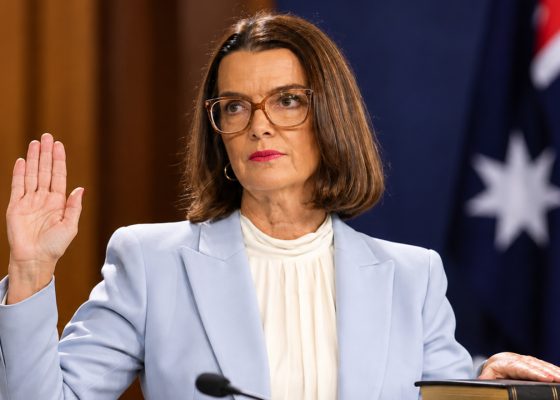


Until then, she says, she will keep working hard. And nobody can argue with the Senator’s work ethic.
“I’m just keen to understand …” is one of the most identifiable catchphrases of senate estimates and committee enquiries and usually signals that the bureaucrat on the receiving end is in for a torrid time.
“The important thing, and what I will continue to do is work really hard from within my party, but particularly in my portfolio, to make sure that I’m making every post a winner,” Senator Ruston told me.
“And that means every post a winner for the Australian public, the people whom we are here to represent.
“I’ve got a wonderful opportunity because I, quite frankly, think the government is doing an atrocious job of health and aged care, and so I think that the opportunity to prosecute their failures at the same time as putting alternatives that I think will deliver good outcomes to Australians is an absolutely golden opportunity for me.”
Senator Ruston is an economist by training. She gets the driving force of Treasury and Finance in the design and implementation of the new Aged Care Act, the newly minted reforms to the NDIS and the contentious proposal to cut the private health insurance rebate for over 65s.
She gets the fiscal constraints and yet argues that Treasury and Finance need to think differently about prevention. Would her approach survive the same budget pressures she’s criticising?
She has a laundry list of things she wants to see change.
She wants to shift Australia from a “sick care system” to a health system. She argues that the current system concentrates too heavily on treating illness rather than preventing it.
Prevention is fundamentally an economic argument for her. Earlier access to healthcare and aged care means fewer avoidable hospital admissions, lower care needs and reduced costs later. She sees this as benefiting both individuals and national productivity.
Her central frustration is the treatment of health and aged care as budget liabilities. She says her biggest frustration over four years in the portfolio has been the failure to view health and aged care as “an investment in our nation”, rather than “a cost centre”.
She wants Treasury and Finance to recognise avoided costs as real savings. Her argument is that money spent preventing deterioration produces savings that conventional budget decisions may fail to capture. We must, she says, “convince Treasury and Finance that an avoided cost is a real saving”.
In fact, she goes further, saying an avoided cost is not merely a budget saving but “an overall productivity benefit to the economy”.
Her argument isn’t simply for higher expenditure. It’s for earlier, better-targeted expenditure that reduces downstream costs. That’s why she wants the Commonwealth Home Support Program made permanent and funded properly as the “primary care” of aged care.
She is trying to make an economic case for more timely care, not abandoning fiscal discipline.
Senator Ruston sees access restrictions as a deliberate feature of current policy. She accuses the government of using administrative systems as barriers to care, citing health technology assessment for medicines and the aged-care assessment algorithm.
She has spent four years articulating what she thinks is wrong with Australia’s health and aged-care systems, in the face of the some of the biggest reform packages in a quarter of a century.
And she’s now describing a philosophy for changing them.
But before she can test that philosophy in government, she has to navigate a Liberal Party whose internal politics have already demonstrated that seniority, experience and policy expertise aren’t always enough.
And of course, the cynics say what a politician says and does in opposition is not an indication of what they will say and do in government.
Senator Ruston didn’t shy away from that either, when I suggested that people like me will be holding her to account for every promise she makes in opposition.
“I hope you do,” she said.
We will, Senator. We will. But for now, kudos to you for your work ethic and your downright dogged determination to be “keen to understand”.