

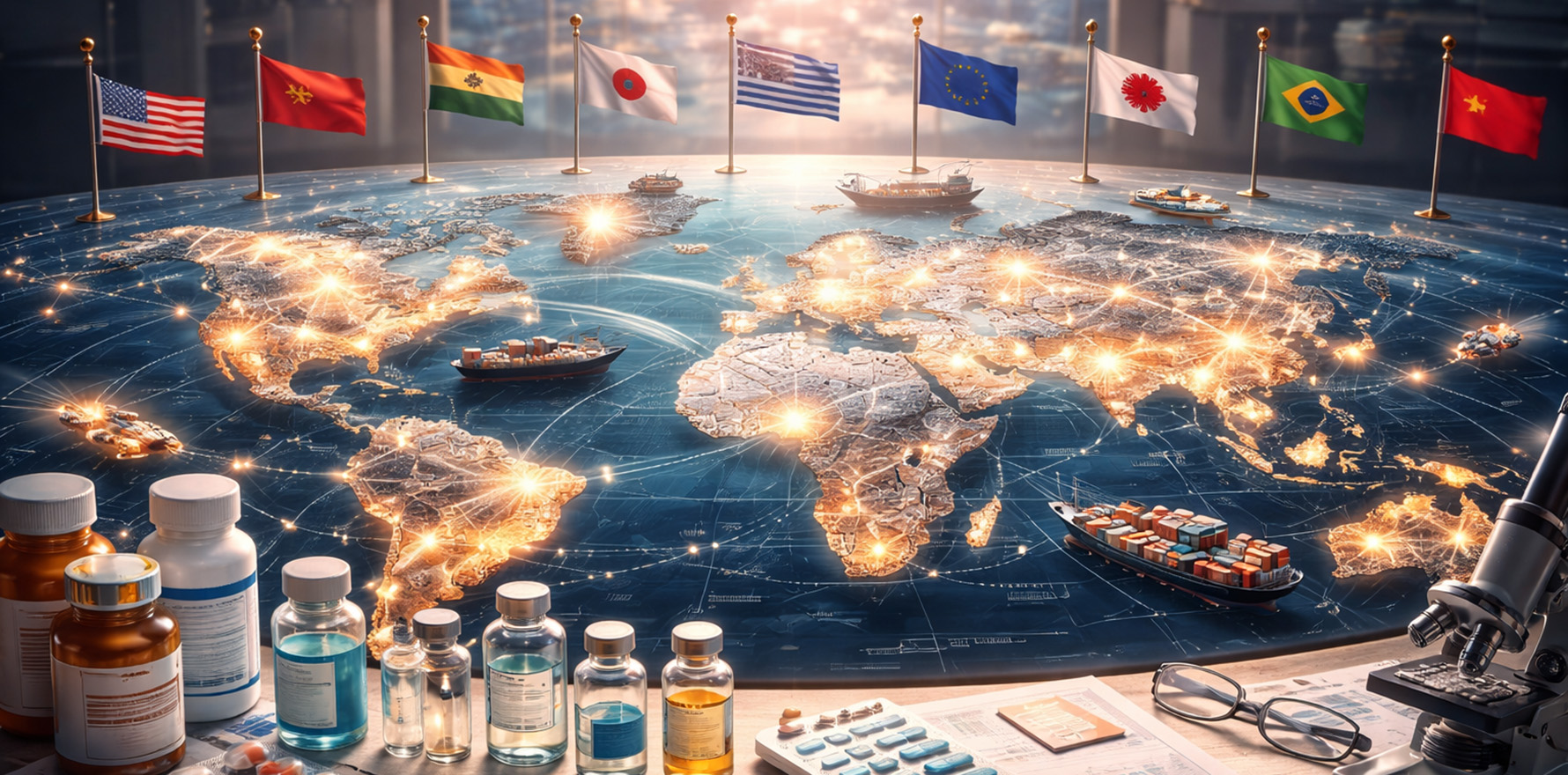
Covid exposed the fragility of global medicine supply and national rivalry is making it permanent.
Medicines, once seen primarily as a matter of public health, are emerging as crucial assets in a more contested world.
The change has been gradual, but recent crises have made it impossible to ignore. The covid pandemic exposed the fragility of global pharmaceutical supply chains, from shortages of basic protective equipment to intense competition for vaccines.
More recently, geopolitical tensions have underscored how easily access to critical goods can become entangled in broader rivalries.
The global pharmaceutical system is highly concentrated. A large proportion of active pharmaceutical ingredients, the chemical building blocks of medicines, are manufactured in a small number of countries, with China and India playing dominant roles.
This concentration has delivered efficiency and lower costs. But it has also created vulnerabilities that are only now being fully appreciated.
For decades, economic interdependence in pharmaceuticals was seen as unambiguously positive. Countries specialised in different parts of the supply chain, and global trade ensured that medicines could flow to where they were needed. As with energy markets in earlier decades, the assumption was that mutual dependence would act as a stabilising force.
That assumption is now under strain.
Governments are increasingly recognising that pharmaceutical supply chains can be disrupted, whether by pandemics, geopolitical tensions, or export restrictions. During covid, several countries imposed limits on the export of medical supplies, prioritising domestic needs over global distribution.
The result was not only shortages, but a loss of confidence in the reliability of international supply.
This has prompted a reassessment of what constitutes national resilience. Stockpiles, once seen as inefficient, are being reconsidered. Domestic manufacturing capacity, long eroded in the pursuit of cost savings, is again being viewed as essential. And the diversification of supply chains, spreading production across multiple countries, has become a policy objective in its own right.
The parallels with energy policy are striking.
Just as countries once sought to reduce dependence on a single source of oil, they are now seeking to reduce reliance on concentrated pharmaceutical supply chains. The language of “energy security” is now mirrored by discussions of “health security”.
Yet there are important differences.
Unlike oil, medicines are not a single commodity but a complex and highly regulated set of products. The barriers to entry are high, and the time required to build new manufacturing capacity can be measured in years rather than months. This makes rapid diversification difficult, and increases the value of existing supply chains.
Also in today’s edition:
- Clinicians told to upskill as patient-side AI begins reshaping consultations
- Let nurse practitioners lead UCCs, says nursing college
- National Parkinson’s plan is out – but where is the money to put it into action?
- TGA opens consultation on sunscreen regulation changes
- Medication software vendors get the eNRMC tick of approval
- Melbourne ranked Australia’s best university and medical school
- New way to raise the alarm if a loved one is deteriorating in hospital
- Fresh inquiry to probe NDIS integrity
The implications extend beyond crisis preparedness.
In a world where geoeconomics is becoming central to statecraft, control over pharmaceutical supply chains can confer influence. The ability to produce and distribute vaccines, for example, has already been used as a tool of diplomacy. Access to advanced therapies may, in time, become a point of leverage in international negotiations.
For major powers, the response has been to invest heavily in domestic capability. The US and the European Union have both introduced policies aimed at reshoring or “friend-shoring” parts of the pharmaceutical supply chain. China, meanwhile, continues to strengthen its position as a manufacturing hub while seeking to move up the value chain into innovative medicines.
For middle powers such as Australia, the challenge is more complex.
Australia lacks the scale to replicate entire supply chains domestically. Yet it is also exposed to disruptions in global markets. The question is not whether the country can achieve full self-sufficiency, but how it can build resilience in a system that is becoming less predictable.
This requires a careful approach to pharmaceuticals. Certain categories of medicines, particularly those that are essential, difficult to substitute, or critical in a crisis, may warrant targeted investment in domestic or allied production. Partnerships with trusted countries can help to diversify supply, while maintaining access to global innovation.
It also requires recognising that medicines policy is not solely a health issue. Decisions about procurement, regulation and industry development have long-term implications. They shape not only patient outcomes, but also the country’s ability to withstand external shocks.
The risk is not that medicines will become the subject of overt confrontation. Unlike oil, medicines are unlikely to be embargoed in a deliberate act of coercion, except in extreme circumstances.
The greater danger lies in more subtle forms of disruption: export restrictions imposed in a crisis, supply chains strained by geopolitical tension, or production concentrated in regions vulnerable to instability.
In such a world, the assumption that global markets will reliably deliver essential goods begins to look less secure.
Related
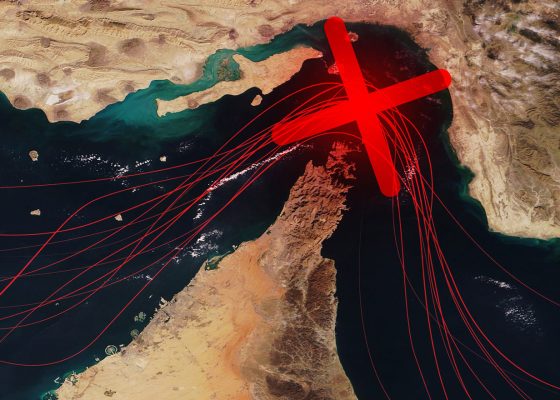


The shift towards geoeconomics does not mean abandoning globalisation. But it does require adapting to a world in which economic interdependence can no longer be taken for granted as a source of stability. In critical sectors such as pharmaceuticals, resilience and redundancy are becoming as important as efficiency.
The lesson is not that medicines have replaced oil as the central resource of geopolitics. Rather, it is that the logic of strategic competition is spreading into new domains. Health, once seen as largely insulated from geopolitics, is now part of a broader contest over supply chains, technology and economic influence.
In this sense, medicines are not simply a public good, but an emerging instrument of statecraft – and a quiet measure of national power.
Vincent So is CEO of the Thoracic Society of Australia and New Zealand. He writes on health, geostrategy, and economics. He has held leadership roles in global pharmaceuticals and began his career in investment banking. He also served as an adviser to Australian and New South Wales ministers in national security and treasury portfolios. He holds a Master’s degree with Distinction from the London School of Economics and Political Science. Views are his own and not of his employer.
This article was first published by The Interpreter from the Lowy Institute. Read the original article here.