

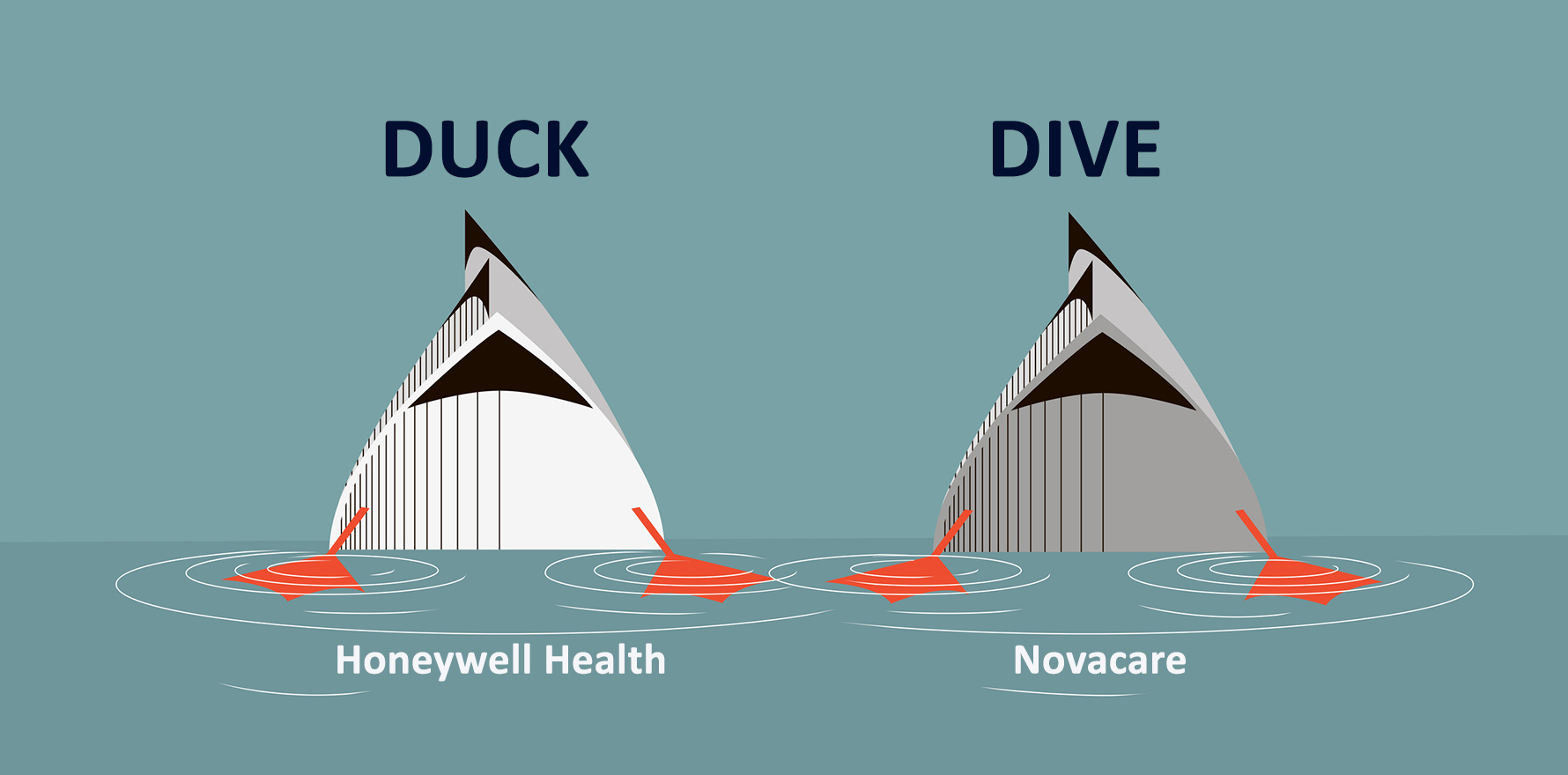
Buck-passing dominated the hearings as Honeywell Health, Novacare and Medirest played hot potato with their responsibilities.
Two former employees of Honeywell Health, which is contracted to provide maintenance services at Calvary Mater Hospital in Newcastle, have accused the company of deliberately altering maintenance reports, “wilful neglect”, intimidating whistleblowers and a “culture of deceptive conduct”.
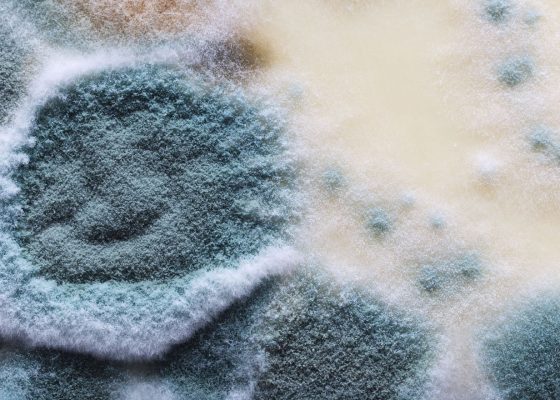
The NSW Legislative Assembly is conducting an inquiry into the management, maintenance and operational issues at Calvary Mater Hospital, after incidences of mould, animal remains, faeces and persistent water supply problems were reported, resulting in ward closures earlier this year.
In the first public hearing of the inquiry today, Luke Carroll, the former senior project manager with Honeywell, said the problems at the hospital were not about the age of the buildings or systems.
“The core problem was wilful neglect,” he said.
“There was decaying and patched-over infrastructure, inadequate or non-existent maintenance practices, quite apparent falsification of maintenance records, and what appeared to be a culture of deceptive conduct.”
Mr Carroll said on 3 April 2025 he wrote a “brutally direct” report to Honeywell, and included Hunter New England Health.
“No one could say they didn’t know,” he told the committee.
He said after that report was delivered he then faced intimidation and discrimination in the workplace.
“I was treated with nothing but contempt and hostility by Honeywell,” he said.
“I was stood down, prohibited from attending or communicating with anyone at the hospital, subjected to interrogation by the insider threat unit of Honeywell’s global security team based in America, and had my name and reputation smeared within the company and hospital.”
In September 2025 Honeywell ceased paying him but maintained he was still beholden to their confidentiality obligations.
Honeywell’s facilities director, James O’Brien, due to be a key witness today, was a no-show at the hearing, despite attempts by the committee to issue him a summons. He was unable to be found.
Lisa Whitehead, Honeywell’s head of Australia, said she was concerned for Mr O’Brien’s wellbeing and did not raise objections when he “opted not to appear”, and that he was working onsite at the Calvary Mater Hospital today.
Committee chair Dr Amanda Cohn asked Ms Whitehead to contact Mr O’Brien again to ask him to appear late this afternoon, “given that he is well enough to work today”.
Ms Whitehead said the allegations raised by Mr Carroll directly to Honeywell were found to be “unfounded and unsubstantiated” even though she acknowledged she did not exactly know what those allegations were.
She also acknowledged that there had been complaints against Mr O’Brien, which had been found by the Health Administration Corporation to be unsubstantiated.
“If there were complaints made to Honeywell, they were all investigated,” she said.
Ms Whitehead said that despite Honeywell’s internal investigation unit being based at the company’s global headquarters in the US, and despite the investigators being employees of Honeywell, the investigation was “independent”.
In her response to the allegations of intimidation and coercion Ms Whitehead did not directly answer the question, but acknowledged that working in the “terrible” conditions at Calvary Mater Hospital was “very difficult”.
Problems at the hospital were the result of “persistent operational issues that largely stemmed from defective aluminium composite panel cladding and faulty façade design that caused water leakage and excess humidity, as well as an outdated HVAC system that lacked the ability to control humidity”, she and the company’s submission to the inquiry said.
“We take health and safety very seriously at Honeywell and we have responded to concerns,” said Ms Whitehead.
“We are comfortable that we are managing the requirements that we need to manage. We are meeting our health and safety obligations.”
Ms Whitehead persisted with the company line that it was difficult to resolve the mould and HVAC problems without fundamental changes to the hospital’s buildings that were not part of its contracted remit.
Related


Multiple witnesses told the inquiry that one of the big challenges was the complicated public-private partnership arrangement that sees different companies contracted for different services within the hospital.
Four layers of entities are involved in the Calvary Mater Hospital PPP:
- The Health Administration Corporation contracted with Novacare in 2005 to have Novacare finance, refurbish certain facilities, design and construct various new facilities, and provide ongoing facilities maintenance services;
- Novacare contracted with Abigroup to design and construct new buildings, and refurbish several older buildings;
- Honeywell contracted with Novacare to be the maintenance provider of the building and plant, known as “hard services”;
- Medirest contracted with Novacare to be the “soft services” maintenance provider, including hygiene, waste management, cleaning, catering, the help desk, and other services.
“Accountability has been diffused across a labyrinth of entities – Calvary, Novacare, Honeywell and the Ministry, leading to a situation where responsibility for safety has been repeatedly shifted due to contractual ambiguity,” said Ashley Dobozy, from the NSW Nurses and Midwives Association.
Christine Hudson, a Health Services Union representative and radiation therapist at the hospital, reiterated that.
“The fundamental problem at Calvary Mater Newcastle is that responsibility has been distributed across the parties in a way that ensures no single party has full visibility or accountability when something goes wrong,” she said.
“The structure creates conditions where every party can point to another, and we see that consistently and constantly.
“This PPP was designed to transfer risk from NSW Wales Health to private companies, but that risk has never truly transferred, because when those companies fail, it is still the government that must intervene, still patients who suffer, still public dollars spent on remediation and still workers who fill the gap.
“What we are examining today is the predictable result of a structure where minimising expenditure on maintenance and prevention is financially rewarded, and where the cost of concealing problems is lower than the cost of fixing them.”
Another former Honeywell employee, plumber Tim Paton, said he had observed problems with the hospital’s drinking water supply, including a stunning revelation that boiling water drinking units – used to make tea and coffee for both staff and patients – had been connected to the hospital’s sewer system “without required separation”.
“There is a risk that contamination from the sewer system could enter equipment used to supply drinking water, meaning patients and staff could potentially be drinking contaminated water despite the issue being raised,” he said.
Rectification of that problem took approximately 14 months, the committee was told.
“There is no reliable way to verify that the drinking water protection system was functioning as intended,” said Mr Paton.
“Chemical dosing systems are used to automatically mix water with concentrated cleaning chemicals when staff fill bottles for cleaning and sanitation at the hospital – these systems were connected directly to the potable drinking water supply with no backflow prevention devices installed.
“Without backflow protection, there is a risk that the cleaning chemicals could be drawn back into the hospital’s drinking water system if pressure changes occur.”
That problem took 16 months to resolve, he said.
Maintenance records would often go missing, turn up altered, or not be drawn up in the first place, Mr Paton told the committee.
“In many cases, no task checklists were attached to maintenance jobs, meaning there was no reliable way to verify that required inspection or maintenance tasks had actually been completed,” he said.
“Maintenance documentation and compliance records that would at times, go missing, appear altered or not aligned with the physical condition of the infrastructure being inspected.
“In some cases, historical maintenance records, inspection reports or testing documentation could not be produced, making it difficult to verify whether required inspections or compliance testing had actually been carried out where documentation does not match the condition of infrastructure or records cannot be located.
“There is no reliable way to confirm that critical maintenance or compliance activities have been completed.”
Mr Carroll said when the PPP was completed and Calvary Mater Hospital reverted back to the control of NSW Health, the problems would not be easily solved.
“Honeywell needs to be removed,” he said.
“There needs to be a comprehensive building assessment, including the critical systems.
“Essentially, the building that you will get back under this PPP contract is a basketcase, and the taxpayers should not have to pay for that.”