

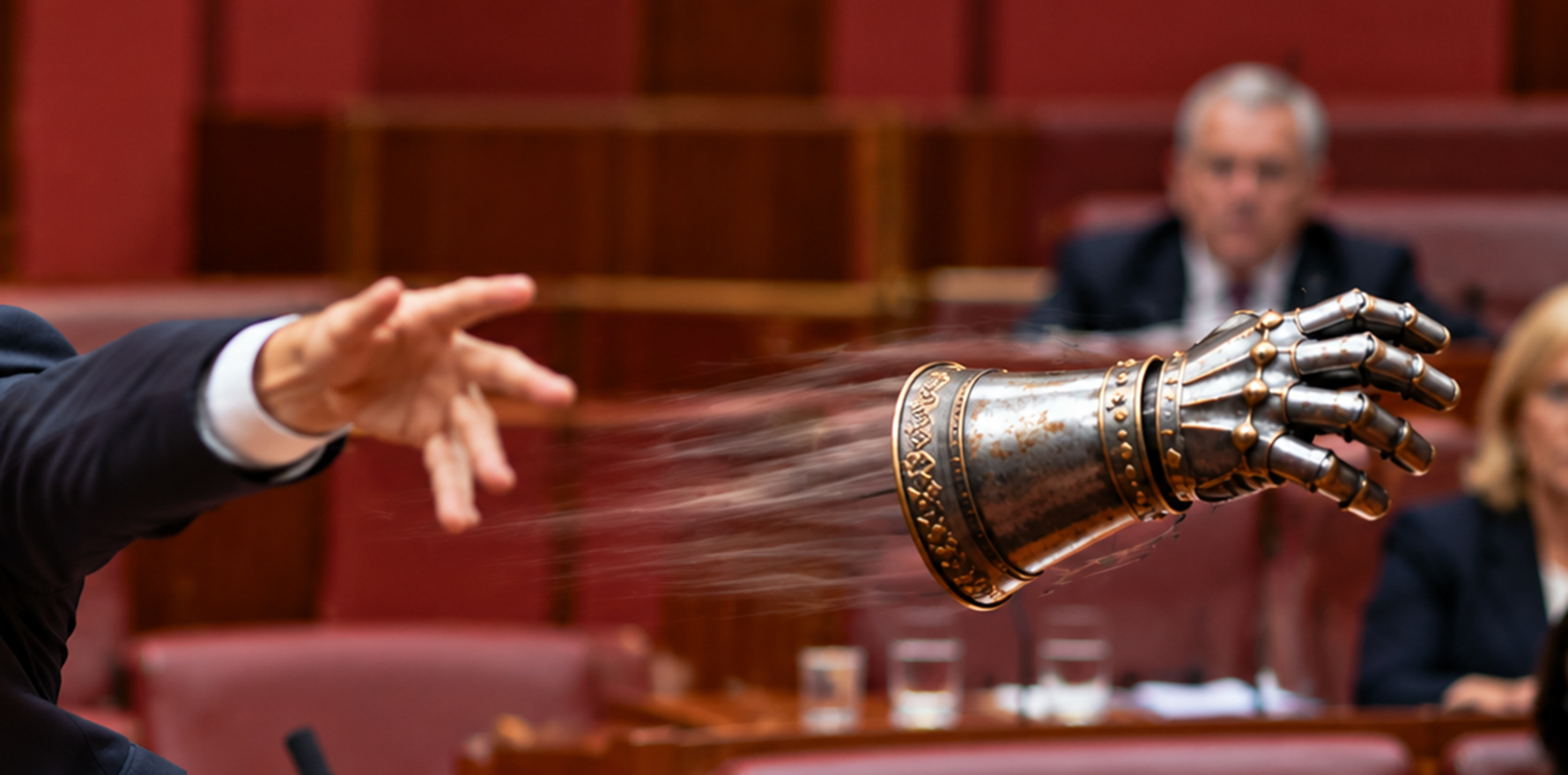
The health minister has vowed to reintroduce his $3bn private health insurance rebate overhaul unchanged today, despite a 38-23 Senate vote against allowing it to proceed, accusing the Greens' leadership of abandoning negotiations as a ‘political stunt’.
Federal health minister Mark Butler has spectacularly ignored opposition health spokeswoman Senator Anne Ruston’s warning not to resurrect his controversial private health insurance rebate cuts, declaring he will reintroduce exactly the same legislation today – less than 24 hours after the Senate voted to remove it from its agenda.
“Mark Butler should take the hint. Don’t try to sneak this cut back onto the agenda. Drop it for good,” Senator Ruston declared yesterday afternoon, after a motion she co-sponsored with independent Senator Jacqui Lambie was carried 38 votes to 23.
But Mr Butler has other ideas.
“We intend to reintroduce this bill,” he told journalists at Parliament House last night.
“It is important that the Parliament have a proper debate. That these really important questions for older Australians are not held hostage to political stunts, but instead that the elected members of the House of Representatives and elected Senators take these issues seriously and debate them properly.”
Asked whether the legislation would be identical to the bill discharged from the Senate Notice Paper just hours earlier, Mr Butler’s response was unequivocal.
“Yes.”
The legislation would remove the additional private health insurance rebate available to Australians aged 65 and over, affecting approximately three million people, including 1.2 million pensioners.
The government expects the measure to save approximately $3 billion, which it says is needed to fund additional residential aged care beds, home care packages and improvements to aged care services.
Shoebridge in the firing line
Mr Butler directed much of his anger at new Greens leader Senator David Shoebridge, accusing him of abandoning the party’s long-standing policy of redirecting private health insurance subsidies into public services.
“This afternoon, we saw the resurrection of the ‘Noalition’ under the new leadership of David Shoebridge,” he said.
“A partnership that is determined to thwart the agenda of the government without debate, without consideration of amendments. Simply by a political stunt to discharge a Bill that is intended to fund more aged care beds, more aged care packages and better care for older Australians.”
Mr Butler said the Greens’ contribution to last week’s Senate inquiry report had indicated a willingness to debate the legislation and consider amendments.
Instead, he said, the party had joined the Coalition in removing the bill from the Senate’s business altogether.
“This is an absolute travesty that flies in the face of any of the members of the Coalition’s professed commitment to sound budget management and flies in the face of, I thought, what was a clear understanding across the Parliament of the need to fund better aged care services.”
He suggested the change in Greens leadership had undermined the government’s efforts to negotiate a compromise.
“We’ve been having discussions with the Greens. It appears pretty clear that the new leadership of the Greens Party was not willing to have those negotiations continue, but instead spied a political opportunity to resurrect the ‘Noalition’ and to team up with the Coalition,” he said.
Negotiations were underway
Mr Butler confirmed the government had been negotiating with Greens health spokesperson Senator Jordon Steele-John as recently as the end of last weekend or the beginning of this week.
“We’ve had good, constructive discussions with Senator Steele-John, as I have, frankly, for the four and a half years that they’ve shared this portfolio,” he said.
Asked whether Senator Shoebridge had participated in those discussions before yesterday’s vote, Mr Butler said: “No.”
He acknowledged that the government had not secured an agreement with the Greens but maintained that negotiations had been conducted in good faith.
“Now we’ve not reached a deal. We’ve made it really clear that we were still committed to the Budget measure as it was originally designed, recognising it’s a tough, hard measure, but one that we think was necessary to fund an expansion of aged care services,” he said.
Mr Butler said he had been prepared to consider amendments, including those arising from concerns about the impact on pensioners, during the Senate debate.
“I said, of course, we understand we don’t have the numbers by ourselves in the Senate. We’ll consider those amendments in good faith in the chamber. But we didn’t have the opportunity to do that.”
However, he declined to commit to specific concessions for pensioners, saying those matters should be debated in Parliament.
Related


No guarantee of a vote this year
Despite his determination to reintroduce the bill this morning, Mr Butler could not say when it would return to the Senate or whether the government could secure a vote before the end of 2026.
“We’re going to reintroduce the bill tomorrow morning, and we intend to press ahead. Quite how that fits into the Parliamentary schedule over coming sitting weeks, I can’t tell you right now … but we’re not going to be delaying this,” he said.
He later acknowledged the limited parliamentary time remaining this year.
“I haven’t had the opportunity yet to talk to the Leader of the House, and we’ll have to go through the usual process to work out whether there’s a landing slot, given that there isn’t that much time left of sitting in the rest of the calendar 2026.”
The Senate’s vote yesterday discharged the legislation from the Notice Paper rather than defeating it at its second reading – a distinction Mr Butler was quick to emphasise when a journalist described the result as a rejection.
“It’s not even a rejection. It’s the discharge of the bill. It’s not even a debate on the rejection. Sorry to interrupt,” he said.
What happens to the $3 billion?
Mr Butler repeatedly argued that the rebate changes were necessary to fund the government’s promised expansion of aged care services.
But he did not identify an alternative funding source if the legislation ultimately fails.
Asked whether the $3 billion would still be invested in aged care regardless of the bill’s fate, he reiterated the government’s determination to proceed with the measure.
“We’re determined to press ahead with this bill. I don’t think anyone in this parliament denies the need for more aged care beds and more aged care packages,” he said.
“I think it’s time that senators, in particular, faced up to their responsibility to recognise the need for hard choices to fund a rapid expansion of aged care services that is demanded by the demographic shift that we’re all witnessing.”
Asked whether the government would concede defeat and find the money elsewhere if the bill failed to pass this year, Mr Butler declined to entertain the possibility.
“I’m not going to respond to that hypothetical at the moment. We’re committed to getting our Budget through.”
He also rejected suggestions that the proposed rebate changes would have a significant effect on hospitals, arguing that the average affected policyholder would face an increase of around 60 to 70 cents a day.
The government had modelled the likely impact on private health insurance membership and was “very confident it won’t have a material impact on hospitals”, he said.
That assessment contrasts with concerns raised by the Coalition and private health insurers about older Australians dropping their cover and increasing pressure on public hospitals.
Double dissolution ruled out – for now
Asked whether the Senate’s action could become the first step towards a double dissolution election trigger, Mr Butler said the government had not considered that possibility.
“I haven’t considered that. I don’t think anyone in government has, which is why we’re doing it tomorrow, because it is that urgent,” he said.
“We’re not going to delay these things.”
He said the government remained committed to negotiating legislation through the Senate but warned that the Greens’ apparent change of approach could have consequences beyond the private health insurance debate.
“If this is a change of approach under the new leadership of the Greens Party, then I think that is not going to be in the national interest,” he said.
Asked whether the confrontation reflected Senator Shoebridge’s character, Mr Butler declined to comment personally.
“I think, though, this is not a good first sign of the Greens Party new leadership.”
Yesterday the NSW government announced it would tip $28 million into what is usually a Commonwealth-funded space in order to alleviate the crisis in which almost 1100 elderly Australians are stranded in public hospitals awaiting an aged care bed.