

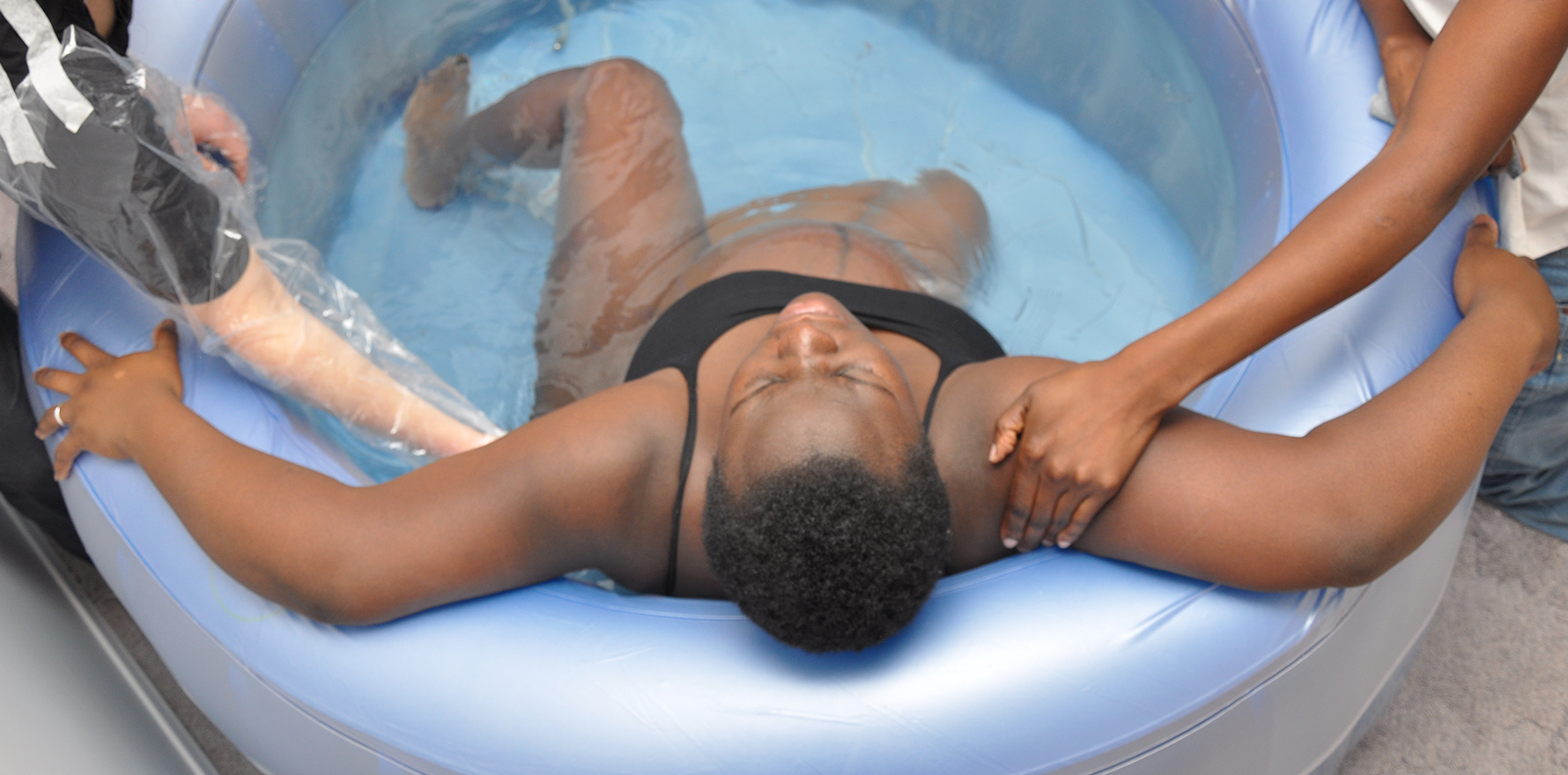
Introducing insurance changes before the workforce is ready risks placing more pressure on an already stretched workforce and reducing the number of experienced midwives able to practise in community settings.
There is a storm brewing in maternity care.
At midnight on 31 December as we ring in 2027, the decades-long exemption to the requirement for Private Indemnity Insurance (PII) for homebirth will expire.
New changes, determined last year, will come into force requiring all midwives who attend homebirth to be endorsed so that they can access the only available PII.
While this may appear to be a simple condition of the regulation, its consequences will be far-reaching.
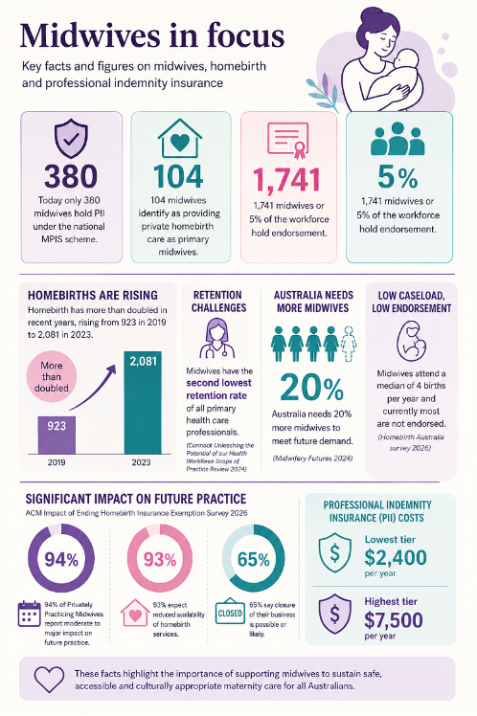
There are 104 midwives who identify as providing private homebirth care and over 2000 planned homebirths in Australia each year (2023); a figure that is growing rapidly.
This regulatory change threatens to collapse Australia’s already fragile private midwifery workforce, affecting women’s access to care of choice and women’s safety. Here’s why.
Cost of insurance
In Australia, there are two midwives required at every planned homebirth; a primary and a secondary.
Most primary midwives offering homebirth are endorsed and have a high enough caseload to justify the cost of insurance; around $7500 annually.
The second midwife, however, is often in a very different position. Many second midwives, particularly in rural and regional areas, may work predominantly in the local hospital and only attend a handful of private births each year.
A recent Homebirth Australia survey found midwives attend a median of four births per year as a second. From 1 January 2027, this second midwife will be required to have the same PII as the primary midwife. If receiving around $500 per birth, they would earn less than the base tier of PII which is $2400 per annum.
It is simply not a viable financial option and we will lose this workforce overnight with women consequently losing access to the option of homebirth.
Also in today’s edition:
- More discussion about vote of no confidence at Concord
- Hospital service CEO walks back ‘demoralising’ Queensland health budget
- Two-thirds of NSW nurses considering quitting
- South Australia backs sovereign AI scribe in bid to challenge commercial products
- Campaign launched over ‘slippery’ home care waiting figures
- First-time CHSP recipients more complex than expected: AIHW
Current requirements for endorsement
From 1 January any midwife providing homebirth services must be endorsed. Midwives must currently complete 5000 hours of clinical practice to be eligible for endorsement and there simply isn’t the time between now and 1 January for all the “second” midwives to gain endorsement.
The expected outcome will be a significant reduction in the availability of second midwives, creating workforce shortages that will directly affect women’s access to homebirth.
The Australian College of Midwives surveyed the profession and the results are concerning.
Thirty-two percent of these midwives will leave the profession if private practice is not viable. Seventy-nine percent of “second midwives” are also likely to reduce hours or leave the profession altogether if they’re unable to “second”.
For a workforce already under pressure, these findings point to significant risks for workforce sustainability and the ongoing availability of homebirth services.
Australia has invested heavily in expanding midwifery continuity of care, recognising the substantial evidence demonstrating improved outcomes for women and babies, higher satisfaction, and lower cost to the health system.
At the same time, the 2024 Midwifery Futures report indicated Australia will need to significantly grow its midwifery workforce over coming years to meet increasing demand.
Introducing these insurance changes before the workforce is ready risks moving us in the opposite direction – placing additional pressure on an already stretched workforce and reducing the number of experienced midwives able to practise in community settings.
These changes will disproportionately impact regional and rural areas, where the number of midwives outnumber obstetricians three-fold.
Perhaps the greatest concern is what will happen if women lose access to homebirth.
Nearly all survey respondents expect that homebirth services will be reduced, and 89% expect this will lead to an increase in freebirth rates.
That’s a major red flag for women’s safety. It’s vital that women birth in safe, regulated models of care with registered health care providers. Restricting access to planned homebirth will not remove women’s desire for that option; instead it risks driving some towards dangerous, unregulated alternatives.
The good news is there are practical measures we can put in place to mitigate the impact.
One is reforming the current endorsement pathway.
The requirement for 5000 clinical practice hours to be eligible for endorsement is not supported by evidence and ACM has been advocating alongside consumer groups and endorsed midwives for a more proportionate pathway that maintains safety while removing unnecessary barriers.
Related


Expediating the pathway to endorsement to ensure there is sufficient workforce of “second” midwives to meet demand when these changes come into effect is vital.
There is also a clear need for a more appropriate insurance model that meets the workforce where it’s at; insurance that recognises the small caseloads often held by the second midwife and offers a proportionately costed product.
We also need to support more midwives to move into private practice and choose to stay there. A transition program to grow the private maternity care workforce, with appropriate transitional insurance arrangements, are the foundational blocks needed to strengthen workforce capacity.
If we can put these measures in place, the impact of the end of the exemption will be lessened and we are less likely to see the reduction in women’s choice, loss of experienced midwives and the strain on our already challenged maternity system, that we fear.
Mia Dhillon is CEO of the Australian College of Midwives.
Kelley Lennon is the chief midwife of the ACM.