


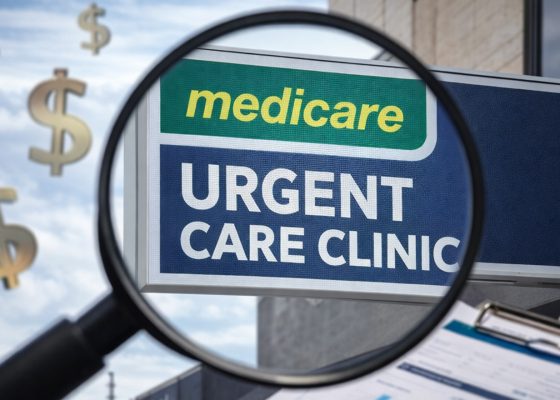
All 137 promised urgent care clinics are now open, with around two million patients expected to visit each year.
The last of 137 Medicare urgent care clinics pledged by the government has opened in Queensland, with the Prime Minister claiming that four in five Australians now live within a 20-minute drive of a UCC.
In this year’s budget, the government promised to invest $1.8 billion over five years from 2025-26, and $525.6 million a year from 2030-31 to keep the clinics operating as a permanent, bulk-billed alternative to hospital emergency departments.
Since the first UCC opened in June 2023 there have been more than 3.1 million visits, with projections of two million visits per year with all clinics now open.
“Now the network’s fully up and running, we think as many as two million Australians every year will go through one of these clinics, most of whom would otherwise have had to go to the local hospital emergency department,” Health Minister Mark Butler told ABC radio today.
“This is a really important part of our broader agenda of strengthening Medicare, delivering more doctors to the system, importantly turning around bulk billing and delivering more bulk billed visits to the GP, cutting the price of medicines and delivering this terrific new model of care, the Medicare urgent care clinic program.
“I was really keen to make sure as we rolled this model out that we went out to existing general practices in a particular region and asked them, do you want to take your practice to a new level, and in addition to your usual general practice work, become a Medicare urgent care clinic?
“So there’s an open expression of interest process, a competitive tender process, then undertaken by primary health networks in the region, and those general practices that submit interests are chosen on merit.
“What we’ve found over the waves of expression of interest is more and more general practices expressing interest in being a part of this really exciting program.”
Related

A second interim evaluation in February this year found that UCCs reduced equivalent emergency department presentations by 10%.
The evaluation also found that between June 2023 and August 2025, 45% of patients said they would have sought care in an ED or called an ambulance if a UCC was not available, rising to 48% after hours.
However, the report said those proportions “should be considered with caution”.
“There are many limitations associated with reporting against the question ‘Where would the patient have gone otherwise?’ These include incomplete data, who records the intention (self or other), variable interpretations by the respondent and the acknowledgment that some patients might still attend ED or be referred to one, regardless of their reported intentions at the start of their Medicare UCC visit,” the report said.
When asked about those limitations today, Mr Butler said he was confident the figure of 45% was a fair representation.
“I visit these clinics very regularly. We monitor it closely,” he told ABC Radio.
“We talk to the doctors who are seeing these patients and I take what they say very, very seriously. But also, there will be ongoing evaluation of these clinics. That was an interim report, we’re tracking it closely.
“We talk to state governments and ambulance services about what’s happening because they were set up with very clear protocols about where people should be.
“To your last point, there are some occasions where people do present at clinics, for example, with chest pain. They’re triaged quickly and they are referred to the local hospital emergency department.
“Equally, a number of hospital emergency departments are suggesting that people go to the local urgent care clinic because they’ll receive care there more quickly.”
Prime Minister Anthony Albanese said UCCs helped ease pressure on hospitals.
“Now that all of Labor’s clinics are open, four in five Australians will live within a 20-minute drive of a bulk billed Medicare urgent care clinic,” he said in a statement.
More than one in four UCC presentations were patients aged under 15, more than one in four were on weekends, and one in four were after 5pm on weekdays.
“I’m delighted to be able to announce that we have delivered to the Australian people what we promised them at the last election, 137 operational Medicare urgent care clinics,” Mr Butler said.
“We promised 50 urgent care clinics at the 2022 election and we delivered 87 in that term and at last year’s election we promised that by June this year we would deliver another 50, and we’ve delivered on that promise as well.
“We now have this network of 137 urgent care clinics country delivering high-quality urgent care, seven days a week over extended hours, and importantly, fully bulk-filled.
“This is a new model of care for Australia, a new chapter in the history of Medicare.
“It’s quite common in many other countries that we usually compare ourselves to, but the idea of a care option somewhere between standard general practice and a fully equipped hospital is still a relatively new concept for Australia and it has worked terrifically well.”