

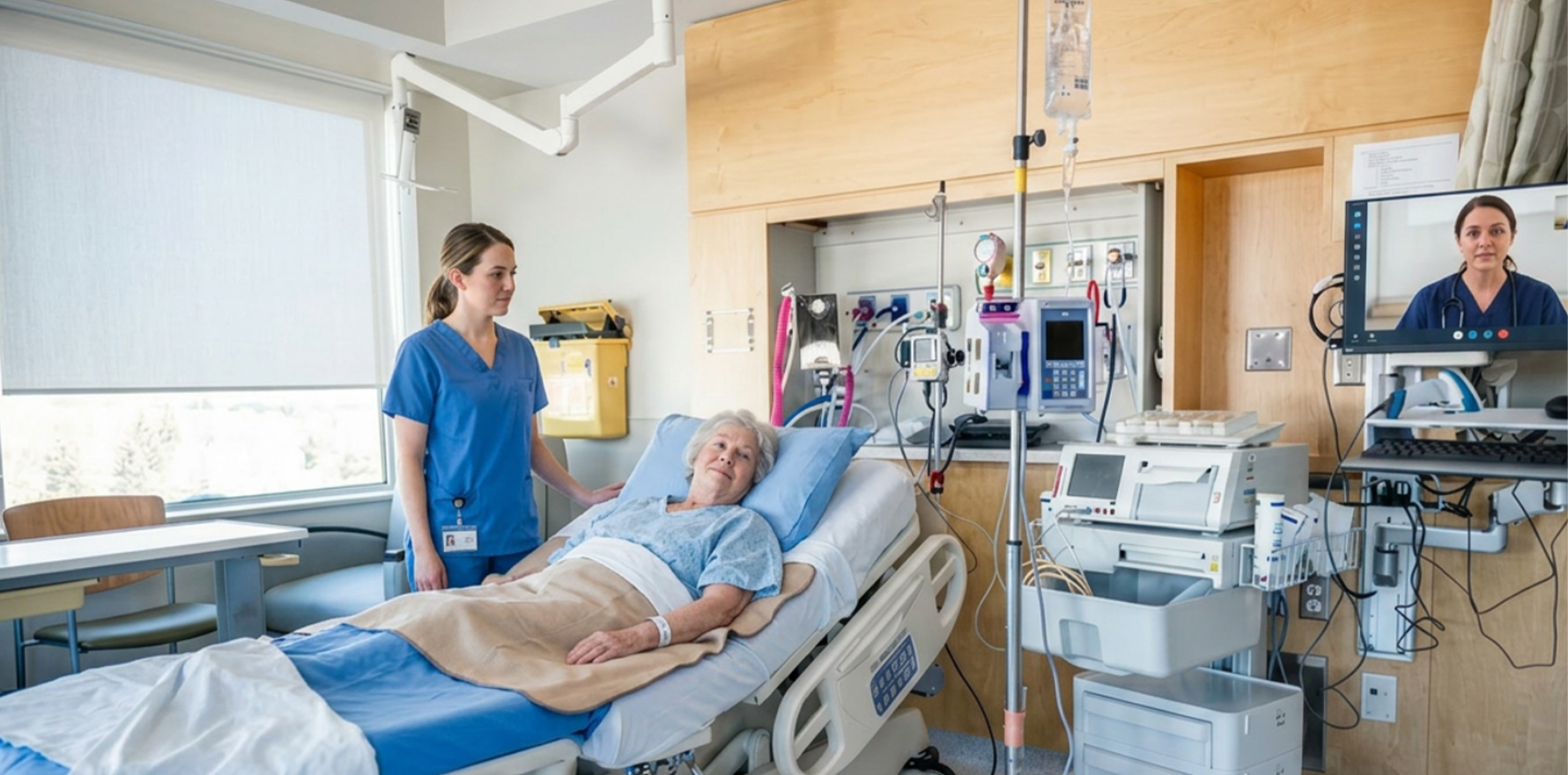
How an advanced virtual care framework is successfully breaking the postcode lottery in regional emergency medicine.
For years, Virtual Emergency Departments (vEDs) across Australia have been viewed primarily as digital safety valves – convenient mechanisms for triaging low-acuity, walk-in style complaints to keep minor ailments out of physical waiting rooms. They were regional digital pilots designed for convenience.
But as our broader health ecosystem faces unprecedented overcrowding and access block, the reality on the ground has fundamentally shifted. Rural and regional health services are battling a perfect storm: persistent clinician shortages, skyrocketing locum costs, and widening service gaps. In response, vEDs like My Emergency Doctor (MED) have quietly evolved from episodic tools into essential, sophisticated networks delivering critical, senior emergency expertise directly to geographically isolated communities.
Crucially, MED are no longer just handling minor bumps and scrapes. They are managing the sharp end of clinical medicine.
The high-acuity surge
Recent data from a retrospective analysis of My Emergency Doctor over a two-year period (2025–2026) reveals a stark transformation in patient complexity. While overall consultation volumes remained stable, the clinical makeup of these presentations changed dramatically.
High-acuity cases surged into virtual waiting rooms at an astonishing rate. Australasian Triage Scale (ATS) Category 1 presentations grew by 229%, Category 2 cases by 291%, and Category 3 presentations doubled. Concurrently, lower-acuity Category 4 and 5 presentations fell by 39%.
| Presentation Type (ATS) | % Change (2025 vs. 2026) |
| Category 1 | +229% |
| Category 2 | +291% |
| Category 3 | +99% |
| Category 4 & 5 | -39% |
This is no longer a “digital GP clinic”. This is a frontline, high-acuity emergency service operating in the cloud.
Defying the limits of remote care
Traditionally, conventional wisdom dictated that high-acuity virtual presentations required immediate, automatic transfer to already-stretched regional base hospitals. The assumption was that complexity would break the virtual model, blowing out consultation times, and overwhelming local resources and infrastructure.
The data proves otherwise. Despite this massive shift toward complex patient profiles, the weighted average call duration for these high-acuity cohorts remained remarkably steady, tracking at approximately 31 minutes.
More importantly, a senior-led virtual workforce framework successfully achieved an average Managed in Situ (MIS) rate of 85%.
“Consider what that means for a small, under-resourced regional hospital or an isolated community clinic,” said Dr Tatiana Lowe, FACEM and Medical Director of My Emergency Doctor.
“Eighty-five percent of these complex patients were safely, effectively treated right where they were, without requiring a costly, distressing, and resource-heavy transfer to a major regional hub.”
Dismantling the postcode lottery
This model directly challenges the “postcode lottery” that has long plagued rural and regional healthcare in Australia. Your access to a senior emergency physician should not be dictated by how many hours you live from a capital city.
By integrating advanced, senior-led virtual care frameworks into state-level health service designs, we can achieve five critical system wins:
- Alleviate Downstream Pressure: Safely keeping 85% of patients in situ takes immense pressure off local rural facilities and larger regional base hospitals.
- Mitigate Bed Block: Better triaging and local management mean fewer unnecessary inpatient admissions.
- Keep local ambulances available for local emergencies: Reduce the need for lengthy inter-facility transfers that tie up paramedics, remove ambulances from their communities, and may still result in ramping at the receiving hospital.
- Improve recruitment and retention of rural clinicians: Support better fatigue management by helping local clinicians sleep uninterrupted and take regular annual leave, while providing 24/7 access to senior emergency advice and practical training support for local nurses and care teams.
- Financial Sustainability: Providing direct access to on-demand specialists reduces the systemic reliance on eye-watering, unsustainable locum costs to fill roster gaps.
“If we are serious about health system reform and health equity, we must stop viewing telehealth as a secondary alternative,” said Dr Lowe.
“Advanced virtual emergency care has proven it can shoulder the burden of complex, high-acuity medicine.
“It is time for health policy and state funding models to formally integrate these high-MIS virtual frameworks into the DNA of our national healthcare strategy.”
About My Emergency Doctor
My Emergency Doctor (MED) is Australia’s leading connected care partner – connecting community health, ambulance services, and rural/remote facilities directly with specialist emergency physicians to deliver acute, on-demand, senior clinical decision-making and alleviate critical infrastructure strain. Rather than operating as standard telehealth, MED provides practical, senior clinical support at the point of care. Across partners including Darling Downs HHS, Barossa Hills Fleurieu Local Health Network, North West HHS, and Murrumbidgee Local Health District, MED supports more than 60 healthcare services with:
- experienced emergency medical authority when local teams need backup
- clear clinical governance to support safe, consistent decision-making
- operational stability for rural, regional, and remote services under pressure
MED’s goal is not to replace local doctors, GPs, VMOs, or existing state healthcare frameworks. Instead, the team is built to support and strengthen the people already on the ground. Improving patient continuity, ensuring thorough documentation, and helping teams make confident, safe escalation decisions when clinical responsibilities are at their highest.
Dr Tatiana Lowe (FACEM) is the Medical Director for My Emergency Doctor (MED), Australia’s leading connected care provider, and the Co-Director of Emergency Medicine Training (DEMT) at Northern Beaches Hospital Emergency Department.