

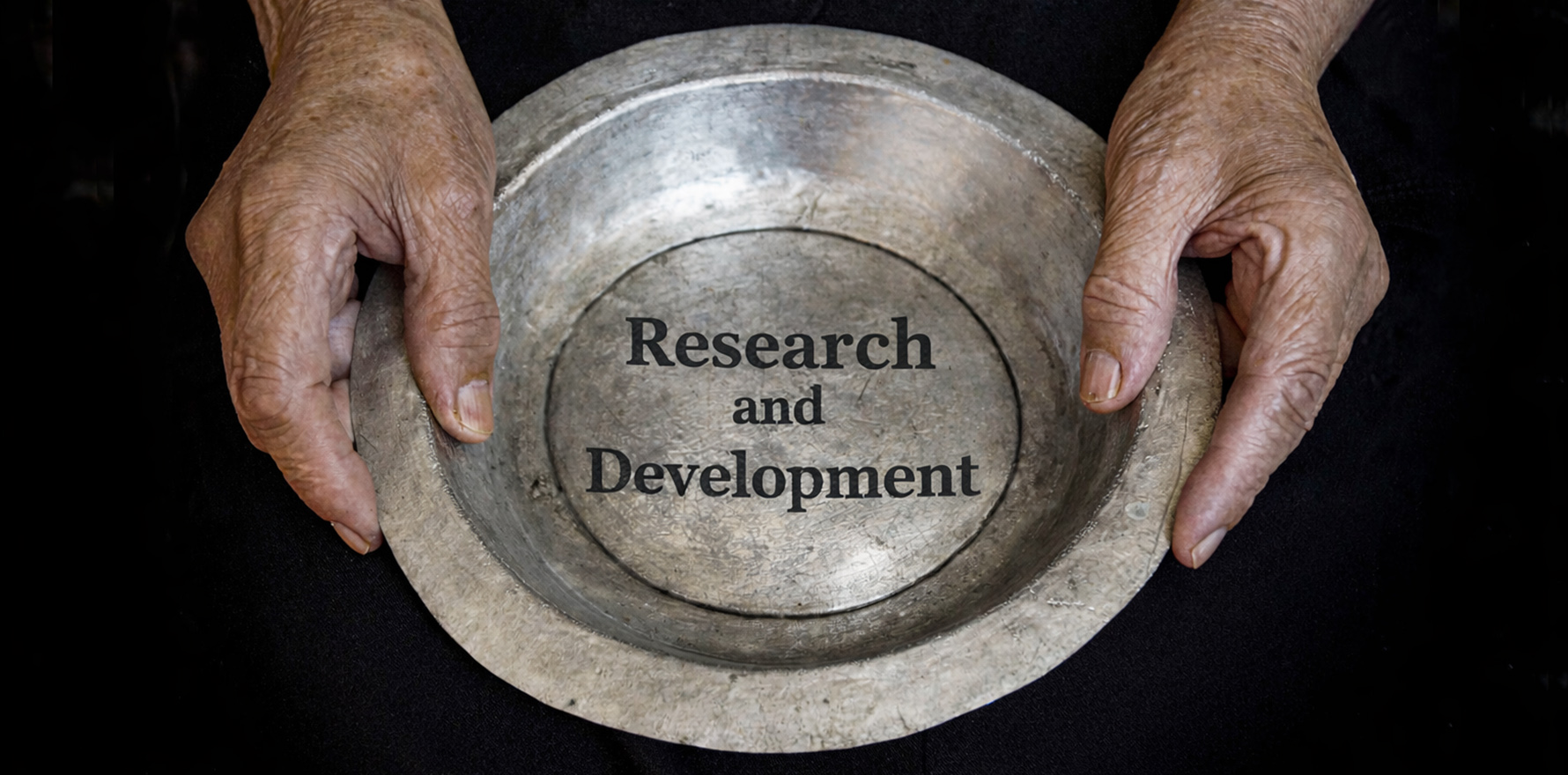
If the government is serious about supporting health and medical researchers and innovators, then it needs to ensure smarter investment for our future.
For decades, Australia’s health and medical research (HMR) ecosystem has been shaped by short political horizons rather than long-term national vision. Yet meaningful change in science and innovation takes time.
Our nation could be a global contributor – developing, exporting, and commercialising the next generation of diagnostics, therapies, and technologies that will define the future of healthcare. But it all comes down to how we invest.
As Research Australia set out in our pre-Budget submission, a high-functioning HMR sector is a foundational, economically generative and cross-cutting solution to the interconnected national challenges facing Australia, and should be treated as strategic public investment rather than discretionary spending.
Health research is economic policy
Health and medical research is too often seen as a “good deed” – a public health imperative rather than an economic and productivity engine. The truth is investment in research and innovation yields both social and fiscal dividends.
Every preventable hospital admission we avoid, every faster diagnosis we enable, and every home-grown medical product we export is productivity in action. Elevating HMR makes that possible.
From work previously undertaken by Research Australia, we know that for every $1 invested in HMR, the Australian economy gains around $4 in return. This is one of the highest returns of any government expenditure.
We have seen these dividends firsthand. Australian researchers pioneered IVF, the Cochlear implant, the HPV vaccine, and ultrasound imaging – discoveries that not only changed lives globally but built enduring industries here at home.
But innovation pipelines are fragile. They depend on continuity, long-term planning, infrastructure, and stable investment across the research lifecycle.
If we are serious about transitioning from a resources-based economy to a knowledge-based one, as governments of all persuasions have promised for years, HMR and its workforce must be recognised as economic infrastructure, not a discretionary expense.
Also in today’s edition:
- We back fee transparency, but not the way this bill does it, say specialists
- Tariffs ‘not the act of a friend’: Butler
- Australia braces for dementia boom
- ‘Fairer, stronger Australia’ from health, disability and aged care use of AI
- NSW commits $64m for new mental health clinicians
- NSW drug diversion scheme diverts just one in 10 offenders in first year
Smarter investment: beyond election cycles
The challenge is not just how much we fund medical research, but how we fund it.
Smarter investment means building the full research pipeline, from early-stage discovery through to clinical translation, commercialisation, and adoption in healthcare systems.
Australia has a world-class asset in the Medical Research Future Fund (MRFF), a $24.5 billion endowment that was designed to provide $1 billion annually to fund transformative research. Yet, despite its growth, the fund is currently releasing only around $650 million per year.
Costings released late last year from the Parliamentary Budget Office commissioned by Dr Monique Ryan MP show that disbursements could be doubled to $1.4 billion annually without eroding the capital base. That means we could meet the MRFF’s original vision of sustaining Australian research while keeping the fund financially secure.
Since first identifying these funds, we’ve worked with government to ensure we use them to ensure smarter investment into Australia’s HMR sector – we’ve been advocating for the development of a new research active healthcare mission to better support the translation and implementation of research and support our clinician researchers and early- and mid-career researchers.
The money exists; the appetite in the research community is there; and the need for new cures, vaccines, and preventive technologies is urgent. What’s missing is the political will to think beyond the next election or a focus on quick political wins rather than delivering bold reforms.
Related



The long game
The question is not whether Australia can afford to invest in health and medical research. The question is whether we can afford not to.
Every delay in funding the next generation of researchers risks losing them overseas. Every grant not awarded means a potential breakthrough left undiscovered.
At Research Australia’s recent policy webinar with Dr Monique Ryan MP on MRFF funding, three key themes emerged from our members:
- We need to invest in HMR strategically, including trialling innovative co-investment models between industry, philanthropy and government.
- We need to ensure that our investment and funding strategies are embedded in the work already underway through the National Health and Medical Research Strategy.
- We need greater support for Australia’s HMR workforce — including early- and mid-career researchers and clinician researchers.
In 2025 we developed the National Health and Medical Research Strategy and undertook the Strategic Examination of R&D. In 2026, the government and the Parliament need to act boldly and decisively to reimagine the role of public investment in HMR as a catalyst to deliver long-term and equitable social, economic and productivity dividends. We should not waste any more time!
It’s time for Australia to embrace the long game, where research and innovation are not the first to be cut in tight budgets, but the foundation upon which future prosperity is built. Because funding medical research is not charity; it’s our most powerful economic strategy.
Nadia Levin is CEO and Managing Director of Research Australia, the national peak body for health and medical research and innovation.