


Until we invest in prevention, making psychological care affordable and ending arbitrary funding distinctions, we cannot claim to be truly tackling mental health stigma.
Australia has made significant progress in reducing the stigma surrounding mental illness. Yet the first National Report Card on Mental Health Stigma and Discrimination found that seven in 10 Australians living with mental illness still experience discrimination.
While public awareness campaigns are essential, stigma isn’t always expressed through attitudes and behaviours. It can be embedded in the way our health system is designed.
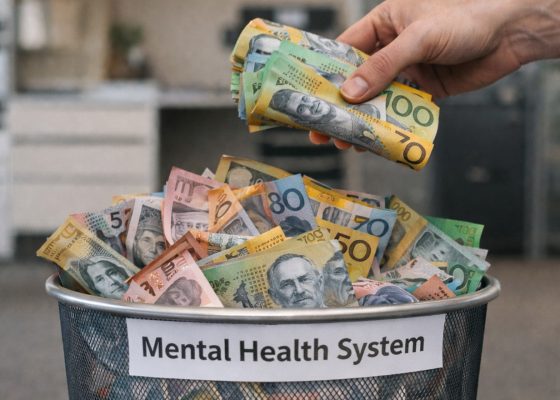
Mental health conditions account for approximately 15% of Australia’s total disease burden, making them one of the nation’s leading causes of ill health. Yet only around 7% of disease-related health expenditure is directed towards mental health.
This gap sends an unintended message: that mental health is less deserving of investment than physical health. The result is felt every day by Australians seeking access to care.
Long waiting lists, unaffordable out-of-pocket costs and limited access to psychological services mean many people delay treatment until their mental health has significantly deteriorated. Those most affected are often those who can least afford it – people on lower incomes, those living in rural and regional communities, and individuals experiencing persistent or complex mental health conditions.
Also in today’s edition:
- PHNs are on a ‘hamster wheel’ churning out false promises
- Albanese expands paid placements. For some …
- Doctors speak out against Honeysuckle Health
- Tributes flow for gentle giant of Ambulance Victoria
- Conspiracy theory No 436: Assignment of Benefit’s real purpose
- Psychiatry workforce grossly inadequate, RANZCP says
- Health services buying AI before national safeguards exist, alliance warns
The inequity is further compounded by Australia’s two-tier Medicare rebate for psychological services.
People who receive treatment from a generally registered psychologist receive a substantially lower Medicare rebate than those seeing a clinical psychologist, despite both being fully registered psychologists qualified to deliver evidence-based psychological care.
This creates a financial barrier that has little to do with a person’s clinical needs and much to do with their capacity to pay.
Our governments need to examine the structural barriers that continue to disadvantage people living with mental illness.
Reducing stigma also means removing the barriers that stop people accessing care. A health system that makes psychological treatment unaffordable reinforces the very inequality we say we want to eliminate.
When people are unable to access treatment because our funding system undervalues mental health or creates unnecessary financial barriers, that’s more than an access issue. It is a form of structural stigma. Our policies should encourage people to seek help early and with the evidence-based amount of treatment, not make it harder.
Related


Every day psychologists see people who have waited too long to seek help because treatment was inadequately funded or too difficult to access. By the time they arrive, their condition is often more severe, more complex and harder to treat.
If Australia is serious about improving mental health outcomes, funding decisions must reflect the true burden of mental illness.
That means investing in prevention, making psychological care affordable and ending arbitrary funding distinctions that force Australians to pay more for care based on the type of psychologist they see.
Until we do, we cannot claim to be truly tackling mental health stigma.
Tegan Carrison is executive director of the Australian Association of Psychologists.