

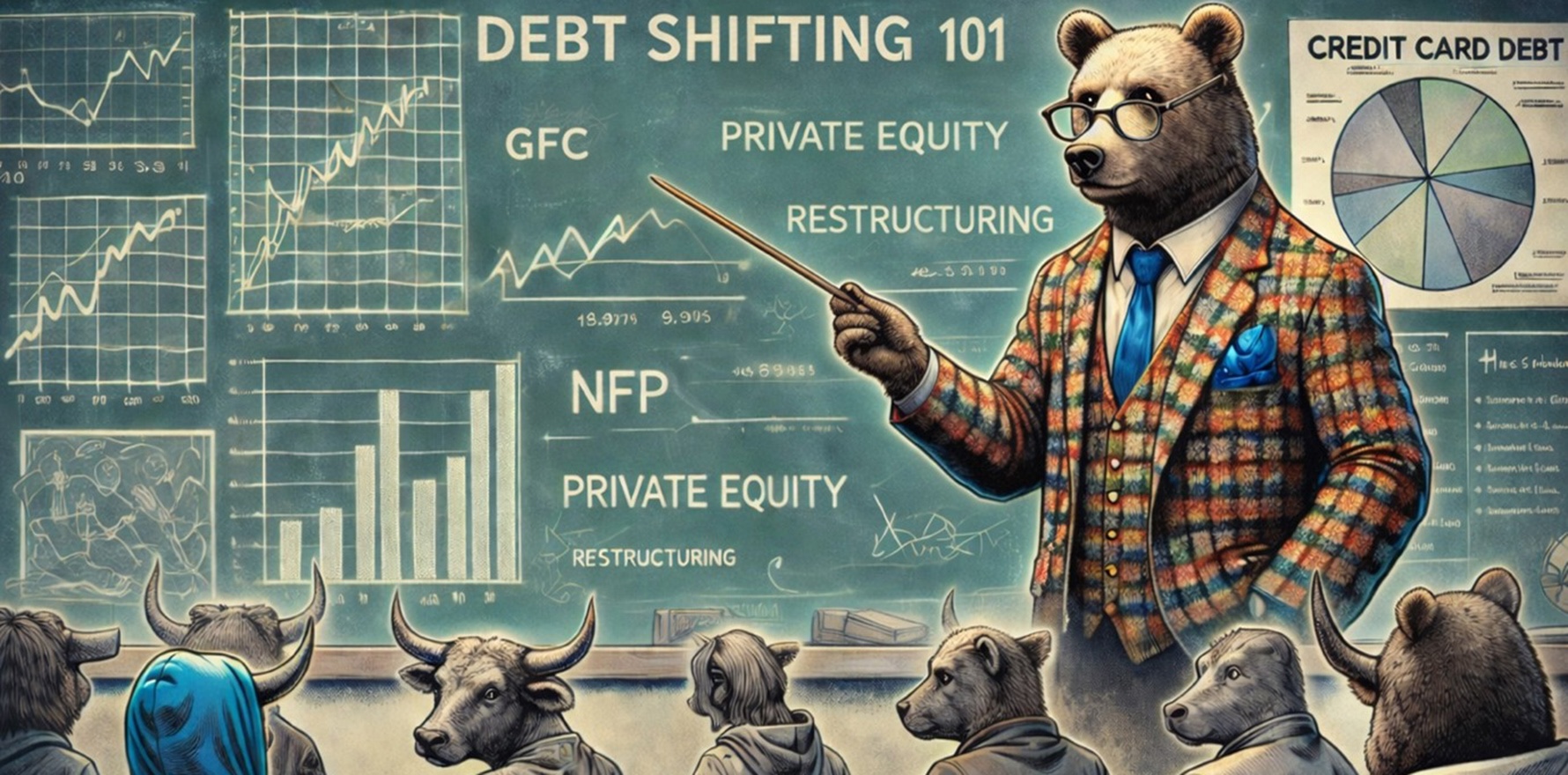
By rejecting good offers for remaining assets and setting up a not-for-profit structure Healthscope’s lenders are shifting the heavy lifting on paying their debt to taxpayers. How is this okay?
When did we start defining Westpac, the CBA, NAB, ANZ, the Bank of China, and a bunch of highly profitable fund managers and opportunistic commercial landlords as charities?
This is a story that surely we should be thoroughly fed up with by now.
It’s Global Financial Crisis, too-big-to-fail 101 – read, in this case, too big to be stupid enough to pay for your massively bad management – writ large.
Back in 2008, we taxpayers, through the government, bailed out most of the major financial institutions that would have failed, only to have the same institutions and their senior management making obscene amounts of money a few years later, without paying government or the public anything back and with nobody going to jail.
Government debt burden from the 2008 GFC bailout was the beginning of the end for most governments around the world as far as manageable public debt was concerned.
After covid, every government was broke and borrowing money crazily. As a result, we are winding back vital public services in order to meet debt covenants.
Services like healthcare are at the top of the wind-back list because healthcare is a huge chunk of every government’s budget.
So how is it okay that Healthscope and its lenders, who still have a debt burden of about $1.6 billion, reinvent its business as a not-for -profit, then take all the tax advantages of that status – our tax dollars essentially – to effectively pay down the debt they created themselves over time?
It’s the classic too big to fail, too big to pay for a screw-up that’s, well … too big. So Healthscope is restructuring in a way that the public and the government pay for it instead and will pretend they’re doing a good thing by everyone.
Not-for-profit rorting is a pretty big industry in Australia already, but mostly you see it in small outfits, where no one, including the government, ASIC or the ATO could be bothered doing the work to investigate who is really benefiting from tax-free status and employee tax benefits.
Healthscope and its lenders’ (which include our four big banks for 15% of the total) three-card trick goes a bit like this:
- We’ve got $1.6 billion in debt and our management has been so bad that we can’t get enough for the remaining assets to be satisfied to take the write-off on what’s left.
- We’re a well connected bunch of senior finance people, backed by some of the country’s biggest banks, who can put pressure on the government if they don’t do what we want.
- What do we do?
- We:
- Restructure the business as a not-for-profit charity (while still effectively controlling the debt) and claim the charity status is all because we want to make people healthy and do good by the public with our valuable healthcare assets and services.
- We “convince” the staff of our new entity into handing over a lot of the benefits that would normally accrue to them, by getting them to assign a lot of those benefits to the new company in the name of company survival. That is, you lose your job if you don’t kick in.
- We bluff the government by threatening that if they don’t let us do this, we will close all these hospitals, the public will lose a lot of key health services in areas we really can’t afford to lose them (which we can’t), and all those people working for us will also lose their jobs. That is, we will make it messy for you.
- We – essentially the lenders – sit on the side and siphon off all the tax-free money from our new status and take it as management fees, rent, staff tax advantages we managed to get them to hand over to us, and pay down the debt over time. Pay it down with taxpayer money essentially.
At the end of the day, what we have is huge financial private institutions, all of whom are massively cash-rich and profitable, choosing not to pay for their own very public screw-up and shifting almost all of the remaining debt burden to the public.
How can this happen after events like the GFC laid bare this game?
Forget morals and ethics, and even pub tests, it can happen legally, and that about is the end of it.
The only other dynamic required for it to occur is the quiet sanctioning of the deal by government behind the scenes.
But if the government wanted to, they could stop it.
They could quickly create some legislation that prevented it based on the real purpose of the charity – paying down debt created by some serious mistakes made by financial people in the private sector who run highly cash-rich and profitable businesses.
They could assess this purpose against the purpose Healthscope and its lenders are pitching to us all – for the good of the nation and all its citizens by keeping all those hospitals and all those people employed by all those hospitals up and running.
It’s for the public good.
Bollocks.
Related


All those assets could have been sold to other not-for-profits if required, and any they couldn’t, for $1 to the government to run.
We could have kept the assets going, it’s just that these people want their money back for nothing.
The lenders didn’t think that was a good enough return on their investment to sell any of the bad assets.
They didn’t like even paying back some of the disaster – at least Brookfield took its medicine in its $1.8 billion write down when it walked away.
But the lenders who are left don’t want to pay for their mistakes because in this set-up the public, over time, can pay for them.
Think about it. Who would be better running these distressed assets for the greater public good: existing well-run not-for-profits, who bid for a lot of the assets, and maybe even government itself, or the people who messed this whole thing up in the first place and are clearly mostly motivated by the money, not by the public health good?
Yes, the public and the government do need a lot of these assets to keep running. No, the public don’t need to be the ones paying for it.
Why is government being so spineless here?
Probably because there are so many in the winning circle of this restructuring deal, including people in government: the financiers with direct access to the bureaucrats in the state and federal health departments; the ex-politicians, some of whom will no doubt end up on the board of this noble new health charity being paid a bomb; current politicians who can relax and not be leaned into any further by the big financial institutions in other deals they need to get over the line (and they won’t have to do virtually any work now on this complex problem); and, the employees, who get to keep their jobs.
No one left to complain really is there?
The public aren’t represented here. It’s the sort of deal that destroys what faith you might have had left in your government.
This deal would be the subject of much mirth at the Glenmore in Sydney or the Lui Bar on the 55th Floor of the Rialto building in Melbourne (famous haunts of the masters of finance in the CBD) and the source of the joke?
One banker to the next:
“So, what do you reckon, does this pass the pub test … us being in the pub and all.”
[cue, whole bar falling off their stools laughing]
It’s an inside job. Something right out of Game of Mates.
Donald Trump would be proud of us.