

Dr Anu asks why individual doctors are still being forced to step up to fill in the rural health gaps and hold together services with limited resources.
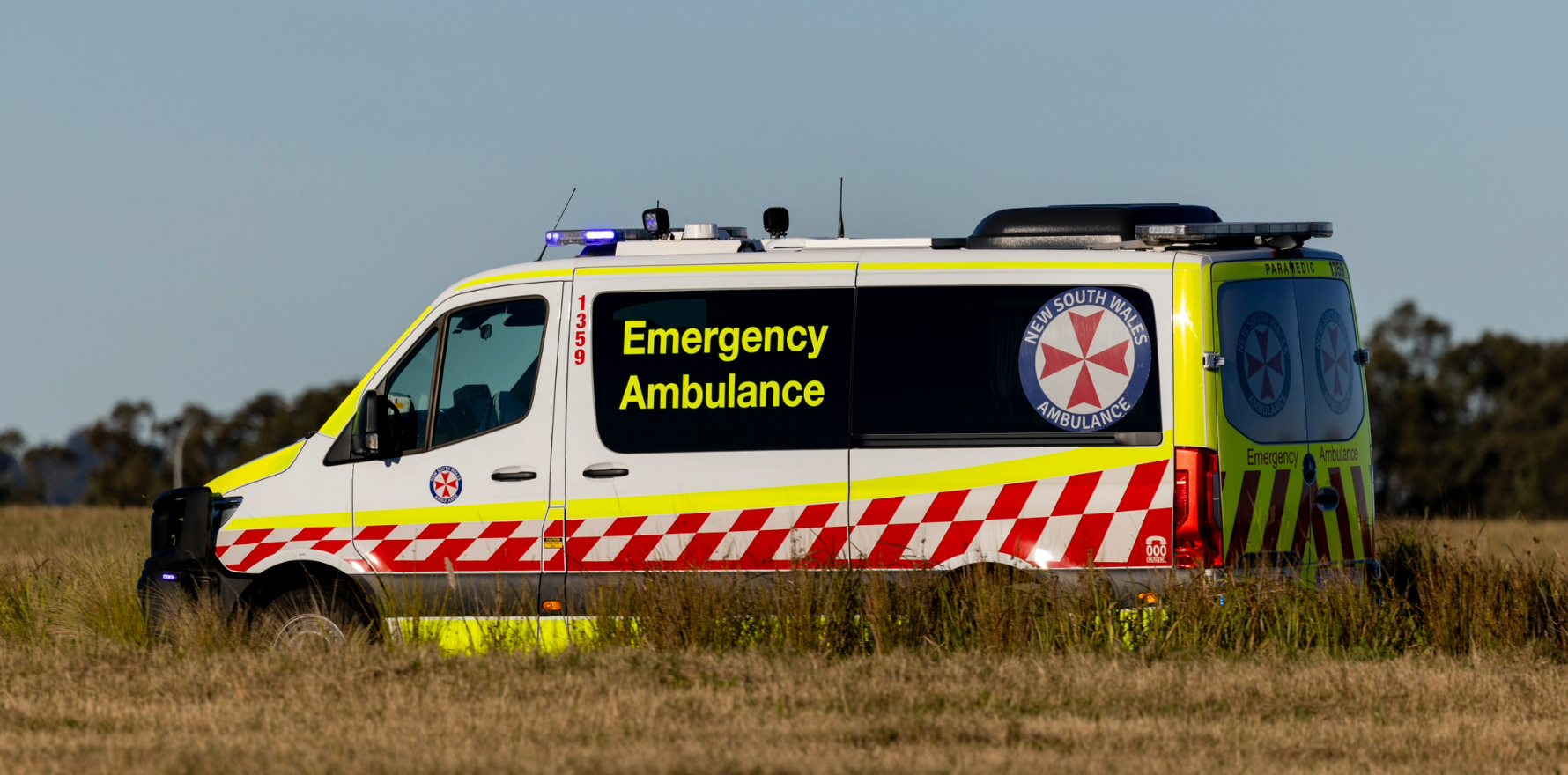
Recently, at the end of a shift in a rural ED, I got into the back of an ambulance. My patient was a 70-year-old man having a STEMI.
We had thrombolysed him, but his ST elevation hadn’t improved.
He was developing post-thrombolysis tachyarrhythmias and was on GTN and heparin infusions.
He needed an urgent angiogram that night, at a hospital two hours away.
There was just one problem…
All the senior paramedics were tied up on other jobs.
The crew that arrived were two junior paramedics.
They explained to their supervisor that the infusions were outside their scope of practice and they weren’t comfortable undertaking the transfer.
Their supervisors said every option had been explored.
This was the best one available.
Related


His three daughters were understandably concerned.
They had overheard the conversation and knew the paramedics weren’t comfortable with the transfer.
And it was coming to the end of my shift.
What was I supposed to do?
Let the paramedics take him, knowing they weren’t comfortable managing the transfer?
Keep him in ED resus, with persistent ST elevation and no access to the angiogram he urgently needed?
I got into the ambulance and assisted with the transfer.
This week, his family sent me this letter.
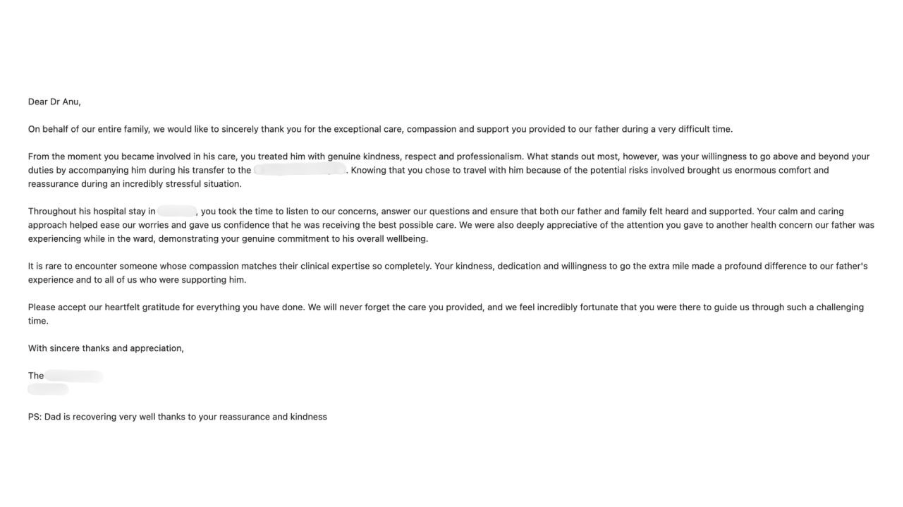
Their dad is recovering well.
I’m incredibly grateful the transport was safe and uneventful.
But I don’t want this to become another story about a doctor going above and beyond.
This happens every day across regional and remote Australia. The doctors, nurses and paramedics working in these communities do incredible work, often holding together services with limited resources.
But we shouldn’t confuse individual commitment with a functioning health system.
This is another example of a healthcare system increasingly relying on individuals to step up and fill gaps that shouldn’t exist.
We need better staffing and more senior clinical support, not just in our hospitals, but across emergency services too.
I’m grateful I could help make that transfer safe.
But it shouldn’t have taken an extra five-hour round trip at the end of my shift to make it happen.
That’s not a sustainable model of care.
Dr Anurag Ganugapati is a clinician, and founder and CEO of StatDoctor and founder of StatHospital, an AI-first platform to allow doctors to find, apply and get paid by healthcare facilities.
This article was first published on Dr Ganugapati’s LinkedIn feed. Read the original here.