

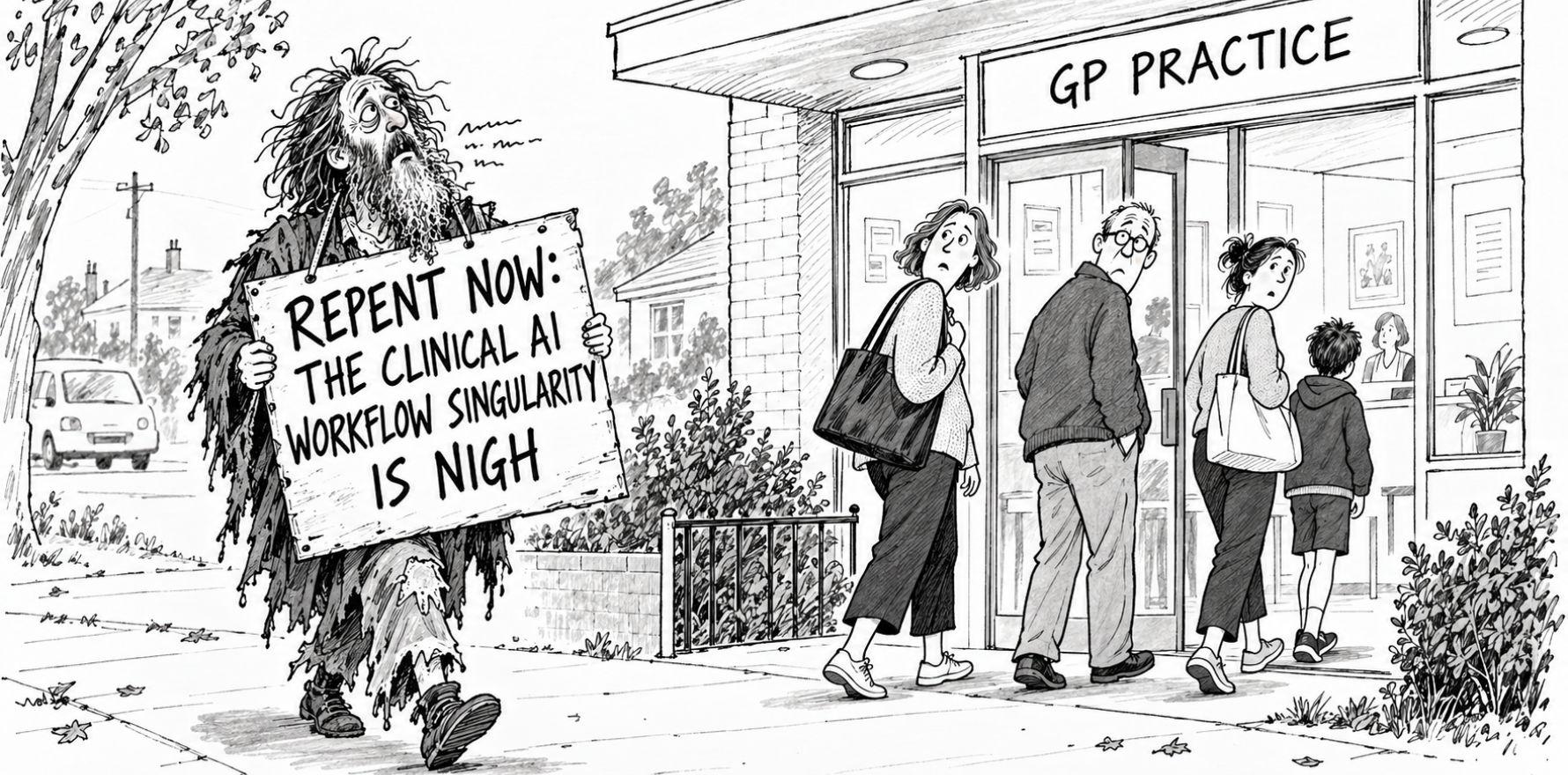
Best Practice has now invested directly in an AI scribe, a knowledge layer and a CPD platform, creating a grip on GP clinical workflow that is going to be hard to loosen.
Best Practice Software has invested $1.7m as the largest component of a $5.4 million investment round in Medcast, the Australian medical education and clinical knowledge company behind MedLuma, the AI-powered evidence and CPD platform for general practice.
Best Practice CTO Jessica White joined the Medcast board as part of the deal. The investment was oversubscribed, with the remainder of the round taken up by private high-net-worth investors, and a Series A is planned for 2027.
Best Practice holds approximately 80% of the GP practice management software market in Australia and, as we reported last week, has previously invested $3.378 million in Lyrebird Health, the AI scribe company that is now being deeply integrated into the Best Practice platform.
Best Practice and Medcast aren’t going to join MedLuma with Lyrebird immediately, but they will. That will pretty much lock out of a lot GPs from Heidi, MBSPro and other aspiring local scribe vendors.
Plus MedLuma to singularity?
MedLuma is Medcast’s AI-enabled clinical knowledge platform, designed specifically for Australian healthcare. Where tools like UpToDate, ClinicalKey and OpenEvidence are primarily built for hospital specialists and draw on global evidence, MedLuma is built around Australian guidelines, local institutions, and the specific clinical decision points that arise in Australian general practice.
It provides evidence-based answers grounded in Australian guidelines and clinical sources, with transparent citations linking back to original material. Medcast has been very careful to negotiate with local clinical IP holders on how their copyright will be handled, something which already looks like is out the window for the big LLMs like ChatGPT and Claude.
The integration with Best Practice, going live in mid-to-late October, will place MedLuma as an icon in the Best Practice toolbar and inside the results inbox.
A GP managing a patient with an abnormal result will be able to call up MedLuma’s synthesis of relevant evidence without leaving the clinical record. That is the basic functionality. The deeper potential – attaching MedLuma’s knowledge layer to Lyrebird’s ambient scribe, which is already reading the consultation and the patient’s longitudinal record – is what will give this combination its strategic weight.
Medcast CEO Dr Stephen Barnett described his vision for where this leads.
“There is a world where, in the not-too-distant future, knowledge layers, ambient scribes, medical records, and orchestration, and data and insights are all merging to produce a better end-to-end patient journey – from a patient self-identifying that they are sick, through to accessing care, through to being delivered care, through to their follow-up afterwards,” he told Health Services Daily last week.
“There is a singularity in there somewhere.”
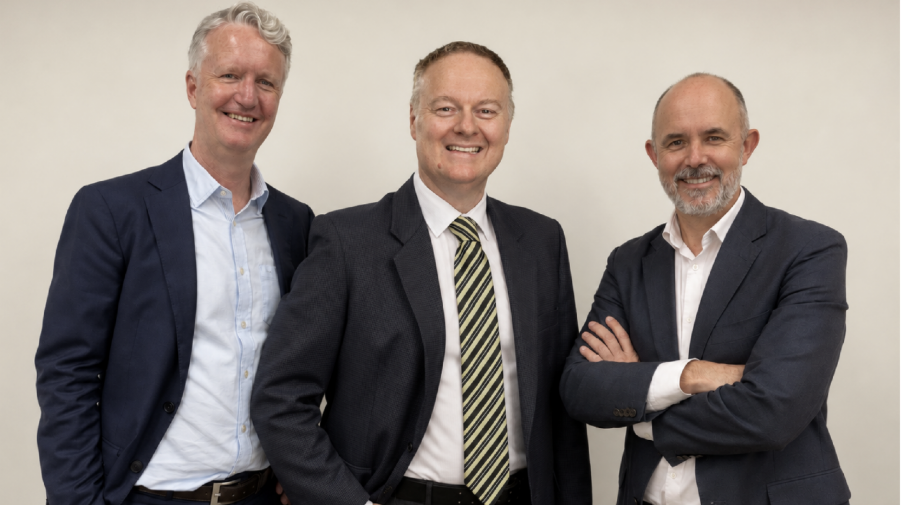
Dr Stephen Barnett(Medcast), Craig Hodges (Best Practice), Justin Lewis (Medcast)
Lock out
Heidi Health is currently integrating with Best Practice, but the connection is deliberately limited: Heidi accesses the patient record for superficial documentation purposes, not deep longitudinal data.
MedLuma is not currently exclusive to Best Practice. Barnett told HSD that it will remain accessible through the browser and that other integrations are in progress, but the depth of integration available to a partner that is also a shareholder, with the CTO on the board, is going to be different from what an arm’s-length integrator can access.
The effect is a layered competitive moat. Best Practice retains the clinical record. Lyrebird reads and documents the consultation and feeds into that record. MedLuma provides the knowledge layer and CPD framework alongside it.
Competitors like Heidi, MBSPro, OpenEvidence, Doximity and ChatGPT can or will be able to connect at the surface but not at the depth where the longitudinal patient data makes clinical AI genuinely powerful.
Barnett acknowledged that the question of what access to MedLuma looks like for other patient management systems or EMRs “will be negotiated over time”.
He said that deeper workflows will likely follow the relationship structure rather than the open market.
Barnett was up front about the deal with Best Practice. It was about access and trust.
“There wasn’t anyone you could really do a deal with other than Best Practice,” he said,
“I think people underestimate when they come into the market with tech that Best Practice has built a lot of trust. They started and were owned by a regional GP. They’ve made a whole lot of decisions along the way to fund things that don’t necessarily make money. I think the brand that they’ve built is really significant.”
Related



MedLuma vs the global knowledge giants
A harder strategic question is what happens when MedLuma meets the global knowledge platforms.
UpToDate and ClinicalKey are established, deeply validated specialist clinical knowledge tools with enormous depth in vertical specialties like cardiology, oncology and endocrinology that a GP-focused Australian platform cannot easily replicate.
OpenEvidence has content partnerships with the New England Journal of Medicine, the American Medical Association, the National Comprehensive Cancer Network, and the American College of Cardiology, and has since added Wiley — which brings the Cochrane Database of Systematic Reviews and more than 400 journals and books — and the full JAMA Network, covering JAMA and its 11 specialty journals including JAMA Cardiology, JAMA Oncology, JAMA Psychiatry and JAMA Surgery
Doximity, the US physician network, acquired Pathway Medical in July 2025 for $63 million, bringing with it one of the largest structured clinical datasets in medicine spanning guidelines, drugs and landmark trials across all major specialties.
Heidi Evidence has built in partnership with HealthPathways, EMGuidance, MIMS, Vidal, NICE, and BMJ Group to reflect regional standards and formularies.
ChatGPT for Healthcare, having just connected to Epic in the US, is potentially the most disruptive entrant: a frontier AI model that can synthesise across essentially all publicly available evidence, with no jurisdictional focus and almost no content curation.
The strategic lever for ChatGPT is its connection to patients. Telsyte’s 2026 AI Report places ChatGPT’s total domestic user base at 13.8 million. It’s become so embedded as a digital patient front door that HealthDirect is deliberately trying to integrate with it, acknowledging it will be the major way patients come to most health system channels into the future.
But Barnett’s argument for why MedLuma wins in the Australian GP context is not about breadth but about trust, governance and localisation.
“In the 1960s, if you graduated, the half-life of your knowledge was about 30 years. Now the half-life of your knowledge is measured in months to a small number of years, depending on which knowledge set,” he said.
“Patients have got the same fire hose of information, and they’re consuming all this information and coming in having done their research. Being able to have a shared decision-making source – a safe, Australian guideline-based tool – and say ‘let’s do this together’ is a really good engagement tool.”
His chisel analogy cuts to the regulatory and safety distinction.
“You can get a 30-dollar chisel from Bunnings and you can get a chisel for your hip replacement, and one is medically validated and one isn’t, but they look pretty similar,” Barnett said.
“The same thing is happening in healthcare now. There are a whole lot of quick wrappers out there. People can cut corners. It can actually be really hard for doctors to tell what is actually safe and what is not.”
The question for the next two to three years is whether that safety and trust premium, built around Australian guidelines and institutional partnerships, holds its value against the scale advantage of global platforms.
UpToDate, in particular, has the vertical clinical depth that MedLuma’s primary care-focused architecture will take years to match in specialist knowledge.
Barnett’s answer is to not try to go that wide but stay in the lane, go deep on Australian primary care, and let the governance and trust model differentiate from the global platforms that are faster, more capitalised, but ultimately but less curated.
The future of CPD
The other significant dimension of this announcement is what it means for continuing professional development.
Australian GPs currently complete approximately 50 hours of CPD per year, almost entirely outside their clinical workflow – webinars, live events, online modules, reading and conference attendance.
The content is largely disconnected from what a GP is actually seeing in their rooms that week.
MedLuma’s integration into Best Practice creates the infrastructure for a fundamentally different CPD model: real-time learning reinforced by actual clinical cases, tracked through the workflow, with non-patient-identified activity recorded automatically.
A GP who calls up MedLuma to resolve a question about a borderline osteoporosis T-score during a consultation is engaging with exactly the kind of evidence that should count as CPD.
The technology to capture and credit that learning automatically now exists. The regulatory framework to recognise it is catching up.
Barnett described this as the “last mile in quality, safety, governance in AI” – the problem of ensuring that clinical AI tools are not just deployed but that clinicians are trained to use them appropriately, with clear accountability structures.
He points to the RACGP’s sixth edition standards, which are beginning to introduce language around AI usage that nudges responsibility toward organisations: whether adequate tools, training, protocols, and consent processes are in place.
The existing major CPD providers – HealthEd, GPCE, the college and Medcast’s own education arm – will continue to serve the structured learning needs that workflow-integrated CPD cannot address: new clinical developments, updated guidelines, skills training, and the conference and event formats that GPs value for peer connection.
But the share of CPD that happens at a desk in the evenings because a GP couldn’t find a more efficient way to complete it is likely to shrink.
Trust as the product
Throughout his interview, Barnett returned to the same word: trust.
“If you’re a clinician, you’re really selling trust,” he said.
“That’s all you can really sell, and they trust you because you’ve got a stethoscope and a degree. We have to do the same thing with the tools we make.”
He described a consult in which a patient with borderline osteoporosis T-scores was anxious about starting medication.
In the past, the GP might have paused the consultation, called a radiology colleague, or ordered a follow-up appointment.
Instead, Barnett pulled up MedLuma, navigated to the RACGP algorithm with the patient present, followed it through with the patient, and the patient arrived at her own conclusion: “So I’ve got it, haven’t I? I’m going to need treatment”.
He described this as shared decision-making.
“Before, I was kind of hiding behind Dr Google, and now I can turn the screen round and say this is a trusted medical validated tool with all the guidelines in it, let’s talk about it together,” Barnett said.
That is a pretty clear product vision.
Not a faster search engine. A trusted partner that a GP can put in front of a patient without embarrassment, and that reinforces rather than replaces the clinical relationship.
Whether MedLuma can sustain that position against the global AI platforms as they improve their curation and their Australian coverage is still an unresolved question.
But the combination of Best Practice’s installed base, Lyrebird’s scribe integration, and MedLuma’s knowledge layer, all operating from within the clinical record, is the most coherent GP AI stack Australia has developed to date.
Medcast CEO Dr Stephen Barnett and Best Practice CTO Jessica White will both be at Burning GP 2.0 this Saturday in Noosa and there are still some tickets available. Readers can score a 30% discount by using the code BGP_30. For more information and to buy tickets see HERE.