


We must stop creating two classes of doctors. A divided system breeds resentment, wastes talent and undermines rural healthcare.
Migration is widely discussed in Australia today, but too often the debate is narrowed to a contest over numbers: how many people should be allowed in, and how quickly.
Far less attention is paid to the harder and more important questions: how do we make migration fit for purpose, and how do we make it work for our economy, our communities and our people?
In that wider debate, migrant doctors make up only a small proportion – less than 6000 each year – yet they are central to the future of rural healthcare.
This opinion piece is about how we recruit them but do not truly attract them, place them but do not always make them feel they belong, and fail to recognise the cost this imposes on our people, our economy and our country
We recruit but do not truly attract. We place them but do not always make them BELONG.
Australia has no pathway to a future without international medical graduates (IMGs), for the foreseeable decades.
Our health system, and especially rural and remote communities, will remain fundamentally dependent on doctors who trained overseas. Yet our workforce policies continue to behave as though this dependence is temporary.
Each year, Australian universities graduate around 4000 new doctors. At the same time, Australia brings in roughly 6000 doctors who trained overseas. This is not a short-term anomaly; it has been the reality of Australian medicine for decades, and the trend is becoming more pronounced.
Any serious plan for Australia to become self-sufficient in medical workforce supply would take decades and even then, complete self-sufficiency is far from guaranteed.
The further one moves from our major cities, the clearer this reality becomes. Around 35% of doctors practicing in Australia obtained their primary medical qualification overseas. In rural and remote communities, that figure rises to between 55% and 65%.
International medical graduates are not a temporary fix. They are a permanent feature of Australia’s workforce strategy. The question is whether we have truly accepted that reality.
Have we designed a system that matches reality?
Have we tailored our workforce policies to meet the needs of the doctors we rely on? Have we ensured they are welcomed, supported and protected from exploitation? Have we created pathways that encourage them to build long-term careers in rural communities?
If IMGs are essential to the future of rural healthcare, have we built a system that reflects that?
Too often, the answer is NO.
We continue to act as though overseas-trained doctors are simply filling gaps until a domestic solution arrives. Yet there is little evidence that such a solution is on the horizon.
No international doctor migrates to Australia because they are passionate about solving our rural workforce crisis. That is not a criticism, it is reality. IMGs come for economic opportunity, safety, professional development, or a better future for their families.
Australia benefits enormously from those choices. For most IMGs, general practice is not their preferred training pathway; but they choose it because it is the most viable route to achieving their goals.
If we acknowledge that Australia attracts more overseas-trained doctors than it produces domestically, and that most are initially bound to work outside metropolitan areas due to moratorium requirements, then we must ask harder questions.
What are we doing to entice them to rural and remote Australia? What is our retention strategy? How do we make them feel belonged, valued and supported enough to stay?
Related


We invest heavily in Australian graduates. Why not the same on IMGs?
For Australian-trained doctors, we have built an impressive and sophisticated rural pipeline, one that ultimately attracts about 30% of graduates to rural.
We incentivise medical schools to recruit rural students. We fund rural clinical schools and regional training hubs. We support rural placements. We offer bonded schemes, scholarships and HECS incentives. We measure outcomes and set targets. These programs exist because policymakers believe they work.
Too often, IMGs enter precarious employment arrangements. They depend heavily on recruitment agencies. They self-fund large portions of their training. They navigate complex, inconsistent pathways filled with regulatory and administrative hurdles. They encounter a maze of supervisors, agencies and requirements that vary from place to place.
Should we be surprised that many IMGs feel unsupported?
Many describe a system that feels transactional and designed to solve immediate workforce shortages rather than invest in long-term retention.
Imagine if Australia applied the same level of investment, structure and support to IMGs as we do to domestic graduates, if we made it easier for them to upskill, gain advanced skills, and connect with rural clinical schools, regional training hubs and rural hospitals.
Retention in rural would rise. Turnover would fall. Rural mentors and supervisors would be better supported and less fatigued.
The two-tier training problem
Nowhere is this divide more visible than in general practice training.
The RACGP currently has around 1700 trainees in the AGPT program, about one-third of whom are IMGs. Alongside them are nearly 600 doctors in Fellowship Support Program, almost all IMGs.
Too many FSP trainees feel they receive second-class treatment. Their pathways are more expensive, more bureaucratic and less well supported.
As a supervisor who has hired and trained IMGs since 2016, I have seen firsthand how exhausting the process can be. It is dominated by intermediaries, inconsistent rules and endless administrative hurdles.
Imagine if Australian graduates in their early career were expected to navigate similar uncertainty, pay substantial fees, and endure inconsistent support structures. There would be outrage. Legal challenges. Immediate reform.
Yet when IMGs raise the same concerns, the response is often silence.
If IMGs feel exploited or undervalued, it is not because they are imagining it. It is because the system has evolved, intentionally or otherwise, in ways that allow those experiences to occur.
The uncomfortable truth is this: the standards we walk past are the standards we accept. Rhetoric must match reality. Websites, brochures and tick-a-box processes cannot hide what is happening on the ground.
Doctors are people. They uproot families, leave support networks behind and make enormous sacrifices to build lives in Australia.
Yet many policymakers continue to cling to the hope that Australia will one day train enough doctors to eliminate reliance on IMGs and design strategies around that hope, creating double standards that undermine the workforce we already depend on.
The missed opportunity
The issue is not simply that Australia depends on IMGs. The issue is the opportunity we are wasting that could have better used in rural.
We have built an extensive, evidence-based infrastructure to attract and retain Australian graduates in rural communities. If those investments are worthwhile, and I believe they are, then the same principles should apply to IMGs, the doctors who already make up the majority of the rural workforce.
We should be asking:
- How do we make rural Australia more attractive to IMGs?
- How do we create fair, transparent and equitable training pathways?
- How do we protect them from exploitative arrangements?
- How do we ensure they feel they belong?
Most importantly, we must stop creating two classes of doctors. A divided system breeds resentment, wastes talent and undermines rural healthcare.
Australia’s rural health system will continue to depend on international medical graduates for decades to come. The question is not whether we need them. The question is whether we are finally prepared to build our system that reflects that reality and whether we are strategically wise enough to retain, attract and grow the rural workforce we already rely on.
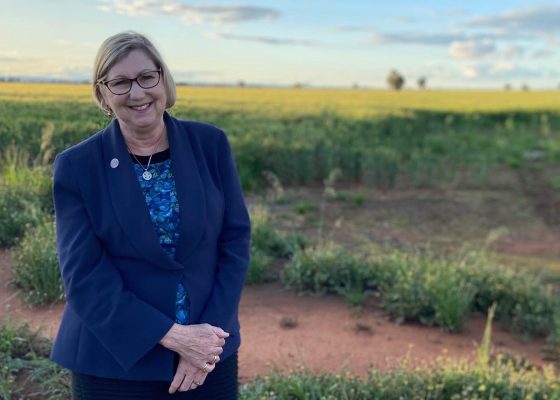
Associate Professor Alam Yoosuff is a rural generalist GP, chair of the Murrumbidgee PHN, and a board director for the Murrumbidgee LHD. He is a clinical academic at the University of Notre Dame.
This article was first published on Professor Yoosuff’s substack. Read the original here.