


If we are serious about sustainable healthcare reform, we must redesign around the reality that longer lives are here to stay and that preserving function, dignity and contribution across those lives is not a peripheral objective.
When writing about ageing, the poet Anne Sexton once mused that “in a dream you are never 80”.
I think about that quote a lot as it encapsulates some of the perceived trepidation about reaching later decades, as well as a stigma that ageing inevitably brings decline.
Australians are living longer than ever before. Reaching one’s 80s is now commonplace, which it wasn’t even a generation ago. Many people will live into their 90s and some beyond that.
This is a profound public health success story. Vaccinations, primary care, cardiovascular treatment, cancer screening and pharmaceuticals have added decades to life and ensured that families have many more years to spend with each other.
We often speak nervously about “the ageing population”, however, as though it is something to be dreaded. It is often discussed in a context of rising demand, rising costs and rising pressure. It is too often presented as a problem that needs to be overcome.
What, though, if ageing itself isn’t the problem? What if the real issue is that our public systems were designed for shorter lives and have not kept pace with the longevity it helped to create?
Our health system is a good example, as structurally it still often behaves as though those extra decades are an anomaly to be absorbed rather than a reality to be designed for.
The architecture of Australian healthcare, from hospital funding to workforce models, remains largely oriented toward episodic, acute care. We are world-class at interventions like hip and knee replacements.
Longevity shifts the burden of disease toward chronic health management over long periods of time, however. Diabetes, frailty, dementia, osteoarthritis and heart failure do not sit neatly within specialty silos. They require coordination, continuity and community infrastructure.
Instead, the health system often delivers fragmentation.
Primary care, the backbone of a longevity-focused system, remains under sustained strain. Medicare rebates struggle to support longer consultations, multidisciplinary care or preventative work.
Meanwhile, hospitals absorb the consequences of poorly integrated chronic disease management. We debate emergency department wait times without meaningful action to prevent patients presenting in the first place.
This is not a funding argument alone. It is a design argument.
Longevity transforms the health question from “How do we treat illness?” to “How do we sustain functional capacity over decades?”
That shift demands integration across general practice, allied health, aged care, housing, transport and digital systems. It requires incentives aligned not just to activity, but to outcomes such as independence, mobility, cognition and social connection.
Related
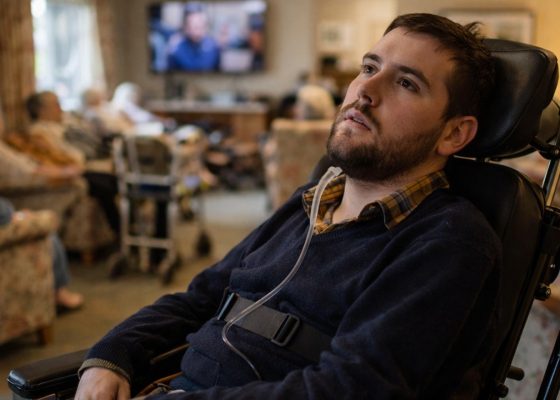


Consider the issue of aged care.
Royal commissions have exposed systemic weaknesses in the sector, yet aged care remains largely separated from mainstream health. Transitions between home, hospital and residential facilities are often disjointed. Preventable hospital admissions remain common. The system reacts to crisis rather than anticipating change.
Decline itself is not inevitable in the way we assume. Many aspects of frailty are modifiable with early intervention such as strength training, nutrition, social engagement and medications. A health system designed for longer lives could and should embed preventative measures as core business, not an adjunct service.
If we persist in seeing ageing primarily through a dependency lens, we will focus on cost containment.
If we see longevity as a structural shift, we begin to ask harder, more generative questions.
Are our funding mechanisms built for multi-decade chronic management? Are our workforce models designed for flexible careers that span 50 years? Is our built environment reducing fall risk and social isolation, or compounding it?
For health leaders, this is a design question as much as a clinical one. An older population affects productivity, labour force participation, tax revenue and demand for services. The health system sits at the centre of that equation. Poorly managed chronic disease constrains economic participation, but well-managed longevity sustains it.
Governments that grasp this concept will lead policy and service innovation. They will invest in preventative primary care as a social and economic imperative. They will integrate digital monitoring with community-based teams. They will measure success not simply in procedures delivered, but in years of independent living preserved.
Australia has the institutional capacity, clinical expertise and policy sophistication to lead in longevity-aligned healthcare. Doing so requires reframing the debate, however.
The question is not how to “cope” with an ageing population. It is whether our health, labour and social institutions are evolving at the same pace as human longevity.
If we are serious about sustainable healthcare reform, we must redesign around the reality that longer lives are here to stay and that preserving function, dignity and contribution across those lives is not a peripheral objective.
Perhaps then we call all begin to dream about being 80.
Gohar Yazdabadi is CEO of COTA NSW. Her work focuses on rethinking public policy and designing systems that meet people’s needs.
This article is an extension of a post first published on Ms Yazdabadi’s LinkedIn feed. Read the original post here.