

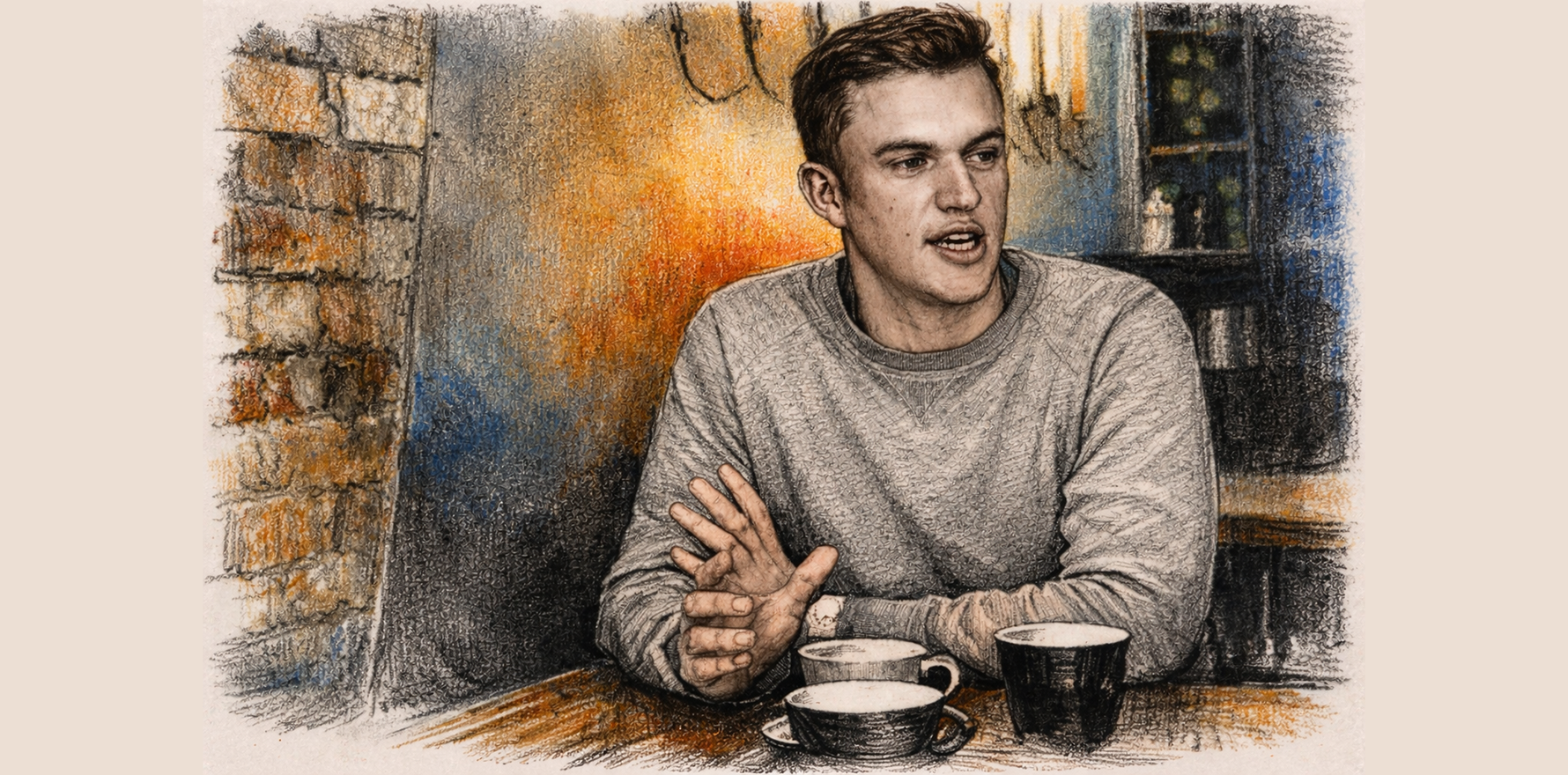
But … should we all be paying more attention to the Eucalyptus vision of the future of healthcare delivery or are we just looking at a reinvented Weight Watchers, with doctors and drugs?
News of the sale of weight-loss platform Eucalyptus to its US equivalent Hims and Hers for $1.6 billion had LinkedIn going into overdrive on Thursday night with a pretty broad spectrum of views on what such a big deal might be saying about the future of healthcare delivery in Australia.
At one end of the spectrum you have what could be termed the Eucalyptus party line. The sale signals a “rupture” not a “transition” (thanks Mr Carney).
“While the sector has talked about integrated people-centred care, technology leaders have just gone ahead and done it at scale. The future is not about the re-jigging [of] existing business models, but reinventing care using a life-course approach and a patient lens. It’s time to take out a blank piece of paper and start reimagining healthcare.”
We guess the commenter may have been thinking about Eucalyptus founder Tim Doyle.
Mr Doyle probably couldn’t have said it better himself.
Eucalyptus is reinventing care delivery using a modern online platform approach that puts the patient at the centre of the care, as opposed to the existing system which is heavily weighted to how the government and the providers want or need to operate.
This approach meets the patient on their terms where and when they need their healthcare stuff.
Except, it’s not.
Eucalyptus is meeting a single desire of a pretty wealthy and socially advantaged demographic of patients, more so even than their new owner Hims and Hers does in the US, where a monthly subscription can be as low as 50% less than what patients pay for the service in Australia.
If you want to subscribe to a Pilot weight-loss program in Australia today you are going to pay between $350 and $600 per month, for which you will get a monthly supply of Mounjaro or Wegovy, some coaching and monitoring via an app, and some health practitioner support when needed.
Notably, if you actually have a pretty good reason to go on one of the weight-loss drugs, you’ll probably be able to get it at your local GP. If you get it as Ozempic, which you can, your monthly cost will reduce to about $160.
Is this better or worse than being on a Pilot or Juniper program?
It depends on quite a few variables: are you really getting much out of your app and the coaching, does your GP know you are on a Pilot program (it’s pretty important to the rest of your healthcare, usually), how good is your GP and how much time do they have to do all the extra stuff that Pilot does, and so on.
Some GPs are already contemplating working with Eucalyptus because they feel that for some patients the program would work, they don’t have the time for this part of their patients’ care in the way Pilot does, and there is continuity between the patient, the GP and the third-party online weight-loss platform.
Dr Max Mollenkopf is one such GP and here he interviews Mr Doyle about that dynamic. It’s an interesting exchange as it takes us all beyond the extremes of the arguments for and against platforms like Pilot.
What this interview does among other things is make it pretty clear that all of this is not exactly black and white.
What is black and white is that equity and patient access in both the US and Australia aren’t a part of the business model of Eucalyptus, or Hims and Hers, and that would make a lot of the PR put out by the groups’ marketing hot air.
Related
It seems to put a big hole in the idea that these businesses are the future of healthcare delivery. If we went down this path we’d be delivering care to about 5% of patients.
But while Eucalyptus the company isn’t the future of healthcare delivery and the saviour of us much put upon patients per se, it and what is has done remains hugely relevant to system planners and policymakers in how they approach healthcare delivery.
Eucalyptus is not necessarily a bad outfit. What it is doing and will do is important in a few ways to the future of delivery by that part of the system that has to deal with the other 95% of patients.
It’s just that their PR line about putting patients at the centre of care and using modern tech to deliver healthcare to the masses, when and where a patient wants and needs it, requires a rider – namely, when and where “wealthy socially advantaged patients” want and need it.
Nothing wrong with this either… mostly.
It’s pretty much the same social and economic profile of a patient who in the past might have turned to Weight Watchers or Jenny Craig. By the way, Eucalyptus bought the Jenny Craig database after the group went bankrupt a couple of years back.
Was Weight Watchers a bad thing?
Prior to GLP-1s it might have been one of the most effective (it wasn’t very effective but that’s weight loss for you) means of losing weight, albeit most members tended to eventually put that weight back on.
It was behaviourial and community-based, not drug-based. Turns out drugs work better, and we’re not getting into the behaviour and community aspect of things here, except to say, it’s complex.
We could have all sorts of arguments around Eucalyptus doing stuff like trying on compounded Ozempic when there was a shortage of the real stuff – Hims and Hers took the idea to an industrial scale in an effort to reduce cost and go around Novo Nordisk, at least briefly – or that not long ago it had virtually no real clinical governance around patient assessment for their program.
Eucalyptus is what it is – a business trying to find its way to becoming both sustainable and highly profitable, breaking some barriers in patient engagement in how they do that.
It has grown up a lot and is now doing much better at balancing its “break the traditional walls down with new ideas and technology” persona with some of the grim and restrictive realities of running a good (read, safe) healthcare business in Australia at scale.
Eucalyptus has yet to turn a profit. It’s not even Weight Watchers yet in terms of market penetration and model sustainability, but it might get there.
I’ve spoken to founder Mr Doyle face to face only twice in the whole life of the company.
The first time was literally months into their journey and I walked away thinking he was an arrogant wanker and knew nothing about the risk and social complexity of healthcare, and who might well be dangerous to patients if he really got going.
Back then he was essentially taking what he’d learnt at an online marketing mattress platform company start up (he was 28 years old) and was following the ideas of Hims which had already got going in the US.
Back then it felt like he thought that the government and healthcare providers were stupid. He essentially thought no one got what he got about the online world and consumers and he was going to smash things up.
I turned out to be wrong in quite few aspects of my assessment back then.
Mr Doyle was always clever but I thought his too-cool-for-school persona would see him crash and burn reasonably quickly in the conservative, risk-adverse and highly regulated world of healthcare.
Early on, Eucalyptus was indeed heading for a car crash, particularly around clinical governance. A few groups, including us, doctor-shopped their service and worked out that anyone could get online, lie about everything and get the weight-loss drug in the post in no time.
It was super loose.
Luckily at the time AHPRA wasn’t really watching too carefully, and luckily as well, it was all non-Medicare-based transactions, which gave the government a surprisingly weak position in regulation of what they were doing, which I think even Mr Doyle might admit now, was dangerous.
But Eucalyptus woke up pretty quickly to the idea that it couldn’t do an Uber in healthcare and just crash though everything until the government gave up.
Mr Doyle has to be credited with seeing in time just how twisted and dangerous the healthcare regulatory and governance path was in Australia and how important is was to patient safety.
He pivoted the organisation rapidly to pursue nearly the opposite of its initial “break things and go fast” attitude. It was the first and is probably the best private telehealth platform group in the country to champion far more regulated and planned telehealth governance.
Mr Doyle also started hiring people who knew about healthcare and pretty quickly hubbed the culture of delivery around good governance, performance data on patient wellbeing, and a culture of truly trying to improve patients’ lives – rich patients’ lives, of course. At the same time he maintained momentum around what was really his initial skillset – direct-to-consumer online platform engagement and marketing.
Then there’s the degree of difficulty in getting up the Hims and Hers model in Australia, which strictly forbids marketing directly to consumers of prescription drugs, versus the US, where marketing direct to consumers is allowed. It’s significantly more difficult cracking Australia.
When I spoke to Mr Doyle again last year he seemed like a completely different person.
I wouldn’t quite say he may have been humbled just a bit by what healthcare ended up doing to him and his grand vision, but he looked tired.
He certainly wasn’t a cocky wanker anymore. In fact, he was pretty reserved, philosophical and thoughtful about what might and could happen.
To me his apparent exhaustion was a good sign. That’s exactly what healthcare will do to you if you really immerse yourself in trying to deliver good care with some degree of continuity in Australia.
Just ask any GP in the country.
He’d learned a lot and he was applying the learnings in a smart way. He was starting to sell himself to the government which was getting very nervous about the rise and rise of the non-Medicare economy, for which his company had become the poster child.
And he was distancing himself from some of the more obvious dodgy platforms that were obviously not taking governance too seriously and putting his plans at some risk, the main ones being the big vertically integrated cannabis platforms.
Now he’s sold the thing and if everything blew up next week he’d be about $22 million richer. If he makes it to 2029 and meets all his new owner’s targets (it doesn’t happen that much) he’s up to earn another $140 million or so.
Not bad for seven years.
Not what I thought was going to happen seven years ago when I first chatted to him in that coffee shop in Hyde Park in Sydney and walked away pretty horrified.
All of which makes Tim Doyle a pretty smart operator, and Eucalyptus, feasibly, the new Weight Watchers, but with doctors and drugs.
But both Mr Doyle and a lot of us know, there’s quite a way to go in this story and in the whole healthcare transformation story.
To add to a growing list of things I’m starting to admire about Mr Doyle is how the hell he got this sale over the line at this point in time – just a few weeks into probably the most massive disruption event for healthcare in its history, bar perhaps penicillin – patient-side AI agents – for the size of the deal he managed to negotiate.
I guess the safety valve on the size of the payout for Him and Hers is the performance benchmarks to 2029.
If you’re Mr Doyle, taking $22 million up front and with $140 million on the table to keep up the smarts and enthusiasm for just another 18 months, you’re going to give it a whirl.
I’m clearly not a good judge of what might happen given my first impressions of Mr Doyle, but – and I say again I thought this was the most encouraging thing about our last chat – he did look a bit exhausted with it all and I got a feeling he was thinking about his next thing.
Another 18 months will go by in no time.
Mr Doyle will be the head of Hims and Hers’ international division looking after Australia, UK, Germany, Canada and Japan (maybe others are planned too).
What that means for Australia isn’t entirely clear yet.
Insiders at HQ in Australia say that everything will be business as usual.
We’ll see, I guess. Mr Doyle has built a pretty impressive management team in Australia so it’s completely feasible.
But for Mr Doyle some things will change big time, the biggest thing probably being shifting his focus from the need to meet the sometimes extraordinary expectations of your major investors in a wildly growing start-up, to the operational needs of a publicly listed global corporate that still has some not insignificant strategic headwinds before it really makes it as a sustainable thing – whatever sustainable means in these days of AI agents.
I’m going to assume that Hims and Hers (and Mr Doyle as well) think the future isn’t just in being the new Weight Watchers with doctors and drugs model, even though you couldn’t say the group was even to that point yet.
Weight Watchers was founded in 1963 and was highly profitable for most of its existence. It wasn’t until the recent GLP1 marketing platforms started getting traction that it started its fairly rapid decline into bankruptcy.
That’s longevity, but that’s also “the olden days”.
At its peak Weight Watchers was a valued in like-for-like terms at about USD$1.7 billion with profits of about USD$170 million, revenue of USD$1.5 billion and about four million global subscribers.
Before you add Eucalyptus’s roughly USD$300 million in revenue, maybe USD$10 million loss and its subscriber base to Hims and Hers, it is currently valued at about USD$3.7 billion with a profit of about USD$130 million, revenues of $2.2 billion but only 2.2 million subscribers.
If you think about the digital platform marketing model reach equation versus the olden days of direct-to-consumer subscription marketing, that Weight Watchers ended up with four million subscribers and Hims and Hers only has 2.2 million to date, you can see it looks like there could be a lot more upside in just pursuing the Weight Watchers 2.0 model.
But is being Weight Watchers 2.0 is a vastly more difficult game than being Weight Watchers 1.0?
There’s a whole new big ugly bunch of corporate gorillas on the playing field in the 2.0 model, possibly the key one being Big Pharma. After all, it’s they who make the drugs and ultimately have a very big stake in how distribution and price occur globally.
You don’t want to be beholden to only one or two giant suppliers, especially a voracious global pharmaceutical giant.
To give everyone a sense of just how unstable this dynamic can be, the $3.8 billion of market cap for Hims and Hers quoted above, was about $3 billion higher less than a month ago.
Then Novo Nordisk, which makes Ozempic, fed up with Hims and Hers trying to make their drug on the cheap via compounding, took them to court for patent infringement and voila! Three billion dollars less in valuation in a few days.
That doesn’t look like a sustainable business model for Hims and Hers yet.
When you are modelling these businesses you always model risk to the extreme. Single suppliers with a lot of capital like Big Pharma are a reasonably big risk.
There are others though, most to do with the too many eggs in the one weight-loss drugs basket paradigm.
What if GLP1s go the way of, say, Vioxx one day? Vioxx was a major heart drug being taken by more than four million Americans before that got taken off the market for killing an estimated 200,000 patients worldwide.
Weight Watchers 2.0 can’t be the eventual play here because it would be leaving too many chronic disease prevention cards on the table, will potentially leave the group exposed to other plays entering around other key chronic care conditions, and it’s too single point of failure on one drug class.
Which brings us back in a very wide circle to what I think has so far been a fluffy, feelgood PR pitch by Eucalyptus but which at some point they may need to actually get serious about – one designed to hide the fact that until now the group really has been a one-drug direct-to-consumer marketing machine. That the group is going to need to far more seriously consider platform healthcare delivery of all the major chronic care conditions in a line and really do something patient-centric and special.
A bit of information that Mr Doyle let go when we last chatted, that I only now see the potential significance of, was that he thought that eventually Eucalyptus might have to start to open bricks-and-mortar centres to complement its online platform.
If you think about that, you have to think that someone is thinking actual continuity of care, not just a one-drug wonder online marketing machine.
If you start to think too hard you could even imagine something significantly disruptive to our current models of care, most especially in the prevention, chronic care, and primary care space. That Eucalyptus may take their rich patient user base and go wide on chronic care management combining physical delivery with their platform delivery is an interesting disruptive thought.
I might be imagining stuff now. I’m good at that.
But one thing is for sure. Mr Doyle isn’t the person I first picked him for.
And while Eucalyptus isn’t the miracle patient-centric dream team caring for everyone they like to paint themselves as, what Mr Doyle has done for us all is open our eyes to the possibilities of pushing much harder at the limits of technology, consumer engagement and healthcare culture in this country.
Add patient-side AI engines into this mix and you have to wonder what the hell Mr Doyle might be doing to the system if he makes it to 2029.
Hopefully after this article Tim Doyle will still be on stage with a couple of other key Eucalyptus managers at our Great Prevention Pivot Canberra Health Leaders Workshop and Summit to talk about some of the ideas in this article with a big focus on prevention into the future. You can see the current program and speakers and buy tickers at www.wildhealth.net.au As a HSD reader you are entitled to a 20% discount using the following promo code: HSDT1HCS-4f3o9W